Home › Office News › 5101 Beach 51st Street, Sea Gate
5101 Beach 51st Street, Sea Gate — From a Daylight Opening to a Screen That Fits
What This Page Is
An Office News case study: a small job written up as it happens. Small jobs are where the mistakes are cheapest to make and most annoying to live with, and this one is about a single number — the difference between the hole you can see and the screen you should order.
The Job
A private house in Sea Gate, the gated community at the western tip of Coney Island, Brooklyn. The windows are ours: Alutech aluminum awning units in a dark finish, fabricated at our own facility and installed in the light brick facade. One of them needs a mosquito screen. The client wants it to sit inside the window's own frame, to match the dark finish, and to fit the first time. We supply FlexScreen screens as a dealer, for every type of window and door, and this is the order.
Why FlexScreen
FlexScreen is a screen supplier we work with alongside our window systems, and their product is a different technology from the conventional aluminum-framed screen. The frame is flexible rather than rigid: it bends to go into the window, then holds itself in the window's screen channel, so the screen installs inside the frame of the window rather than sitting on it. It goes in and comes out by hand for cleaning, and there is no rigid frame to dent or bend in transit. On a dark aluminum window like these Alutech units it disappears — you see the mesh, not a silver screen frame around it.
Project Log
13 September 2026 — Measuring the daylight, sizing the screen
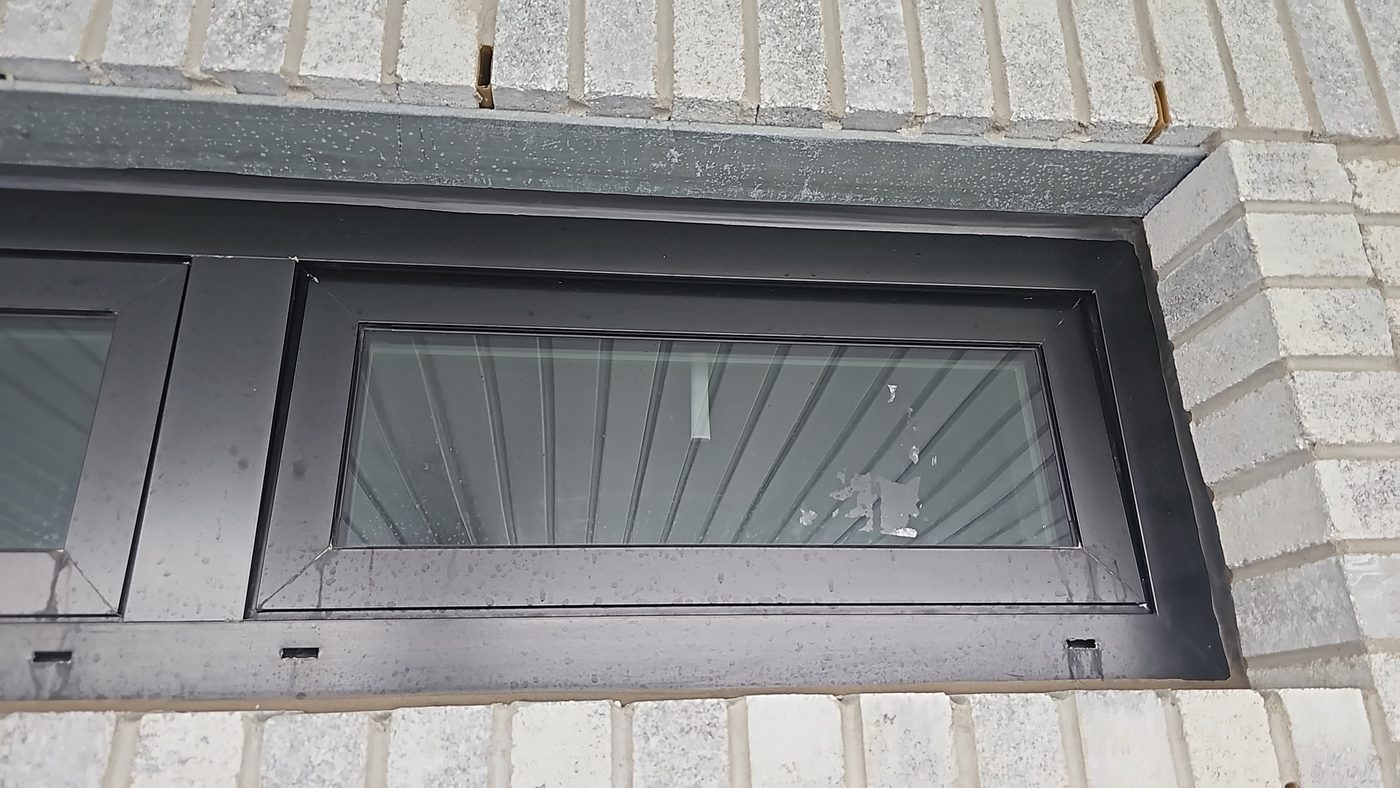
Where the job is: the window is installed and finished; the screen slots in the bottom rail are visible in the photograph and the screen channel is clear. Nothing else on the window is changing.
What we measured: the daylight opening — the clear glass area you can see through, edge of frame to edge of frame — at 27⅝″ wide by 11½″ high. That is the number the eye lands on and the number people order screens to, and it is the wrong one.
The decision: the screen is ordered at 29⅛″ by 13″. A screen does not sit inside the daylight; it sits in the channel behind the frame, overlapping the daylight on every side so that the mesh is held by the frame and there is no gap for an insect to walk through. On this window that overlap is ¾″ per side, so 1½″ is added to each dimension: 27⅝ + 1½ = 29⅛, and 11½ + 1½ = 13. The overlap is set by the window's channel, not by a rule of thumb, which is why we measure the channel and not just the glass.
Why it matters: a screen ordered to the daylight would be 1½″ short each way and would not hold in the channel at all. A screen ordered oversize by guesswork would not flex in. Getting the one number right is the whole job.
Next: screen on order from FlexScreen; fit on delivery, and a photograph of it in place to close the log.
Further entries will be added above as the job moves.
Site Photograph
Site photograph from the measuring visit, 13 September 2026.
Related Pages
Window screens · Awning and top-hung windows · All Office News
Planning Something Similar?
For a screen that fits the first time, send us a photograph of the window and the daylight measurement, and tell us the window type. We will size the screen to the channel and supply it as a FlexScreen dealer, for any window or door.