Since 2021 most new facades in New York City must use glass that birds can see. What the law asks for, how the patterns work, which products meet the threat factor, and how we supply bird-friendly insulated units for windows, storefronts, curtain wall and railings.
In short: Bird-friendly glass carries a pattern birds can see — most often small ceramic frit dots fired onto the outer face, spaced inside the “2 by 4” rule — so they do not mistake the reflection for open sky. New York City’s Local Law 15 of 2020 requires it on new facades and replaced glazing up to 75 feet above grade, with a tested threat factor of 25 or less. We supply bird-friendly glass as insulated, laminated and monolithic units in the windows, storefronts, curtain wall and glass railings we install, and as glass only.
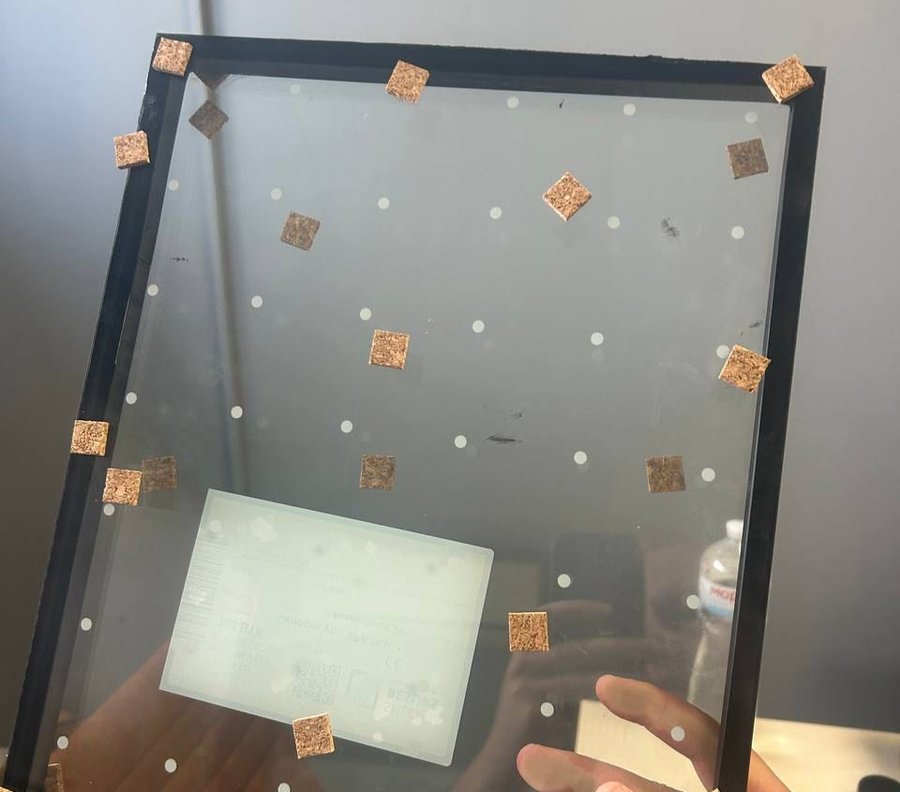
Birds do not see glass. They see the sky and trees reflected in it, or the plants on the other side of it, and fly at them. The answer is a pattern dense enough that a bird reads the pane as a solid, and faint enough that a person barely notices it. Modern bird-friendly glass does this with a ceramic dot pattern covering a few percent of the surface, an acid-etched texture, or a coating that reflects ultraviolet light birds see and we do not. The pattern is on the glass itself, so it lasts as long as the window, and it goes into an ordinary insulated unit with low-E glass, so nothing is lost on energy.
New York City’s Local Law 15 of 2020 added section 1403.8 to the Building Code. In effect since January 2021, it applies to new buildings and to alterations that replace the exterior glazing. The main points:
The law is enforced through the DOB filing: the drawings must identify the bird-friendly products and their threat factor, and the glass delivered must match. We provide the manufacturer’s rating documentation with every order so the filing and the inspection line up; see permit management.
| Type | How it works | Look | Typical threat factor |
|---|---|---|---|
| Ceramic frit dots or lines | Opaque ceramic ink screen-printed on the glass and fired in the tempering furnace; usually on the outside face (surface 1) or the inside face of the outer lite (surface 2) | Small white, gray or black dots on a 2 × 2 or 2 × 4 inch grid; 5–10% coverage; faint from inside | Most tested patterns 15–25 |
| Acid-etched pattern | Dots or stripes etched into the outside face | Matte pattern, no color; reads as a light texture | About 20–30 depending on pattern |
| UV-reflective coating | A pattern that reflects ultraviolet light, which birds see and people largely do not | Nearly invisible to people; the choice for ground-floor retail with a transparency requirement | About 25–30; the law allows up to 27 where transparency is required |
| Applied film or tape | Dot film or dot tape applied to the outside of existing glass | Visible dots; the retrofit answer | Tested films reach 25 or less; must be maintained |
The spacing rule behind all of them is the “2 by 4” rule: markers no more than 2 inches apart vertically and 4 inches apart horizontally, because most songbirds will not attempt a gap smaller than that. Patterns on the outside face work best, since a pattern behind a reflective outer surface can be washed out by the reflection. See our glass types and specifications page for how patterns combine with coatings and laminates.
Every quote names the pattern, the surface it is on, the coating, the make-up and the published threat factor, so the architect can put it on the drawings and the DOB examiner can check it.
Glass with a visible pattern, usually ceramic frit dots or lines, an acid-etched texture or a UV-reflective coating, spaced closely enough that birds read it as a solid object and do not fly into it. Under NYC rules it must have a threat factor of 25 or less in the American Bird Conservancy test.
Yes. Local Law 15 of 2020, in effect since January 2021, requires bird-friendly materials on the exterior wall and its openings up to 75 feet above grade on new buildings and on alterations that replace the glazing, with non-compliant glass limited to 10 square feet in any 10-by-10-foot area. Glass railings, awnings and similar see-through installations must comply at any height.
A guideline for pattern spacing: markers no more than 2 inches apart vertically and 4 inches apart horizontally, because most birds will not try to fly through a gap that small. The tested products we supply are patterned inside that rule, which is how they reach a threat factor of 25 or less.
No. The usual pattern is small white, gray or black dots on the outside face of the outer lite, covering a few percent of the glass. From inside the view is almost unchanged; from outside the dots read as a fine texture. Etched and UV-coated versions are available where the dots are not wanted.
Yes. The pattern goes on the outside face (surface 1) or the inside face of the outer lite (surface 2), and the low-E coating sits on surface 2 or 3 as usual, so the unit keeps its energy performance. Laminated and tempered versions are available for doors, storefronts and railings.
Yes. Applied dot films and tapes with a tested threat factor are accepted where the glass is not being replaced, and they are the usual answer for an existing building. For new glass the pattern is fired into the glass and lasts as long as the window.
Alex Glass Construction supplies bird-friendly insulated, laminated and monolithic glass in the windows, storefronts, curtain wall and railings we install, and as glass only for other contractors. We confirm the threat factor rating with the manufacturer for every order.
Architectural Glass Glass Types & Specifications Low-E Glass Insulated Glass Units Curtain Wall Glass Railings Guardian Glass
About this page. Written by Alex GC Inc. d/b/a Alex Glass Construction and reviewed before publication by Aleksandr Chernovolenko, Managing Partner, with our design and estimating lead and a field foreman. Our foremen hold the NYC DOB Site Safety Training supervisor card and our crews the 40-hour worker card; we are certified to fabricate, install and service Alutech and Everest aluminum systems. Facts are drawn from our own projects, manufacturer test data and the applicable codes; where we are giving an opinion, we say so. Last reviewed September 2026. Credentials
Send the glazing schedule or the elevations. We will propose the pattern and make-up, confirm the threat factor with the manufacturer, and quote the glass supplied or installed.