A service call for cracked storefront glass and a leaking door gasket, the inspection that followed, and why we recommend 1" IGU in the existing storefront.
In short: a service call for cracked storefront glass and a worn door gasket at a commercial establishment turned into an inspection of the whole front. Our strong suggestion: replace the 1/4" single glass with 1" insulated glass units for sound and energy performance, keep the existing storefront framing, and either re-glaze the existing door with new stops or replace it, depending on whether the door's brand can be identified.
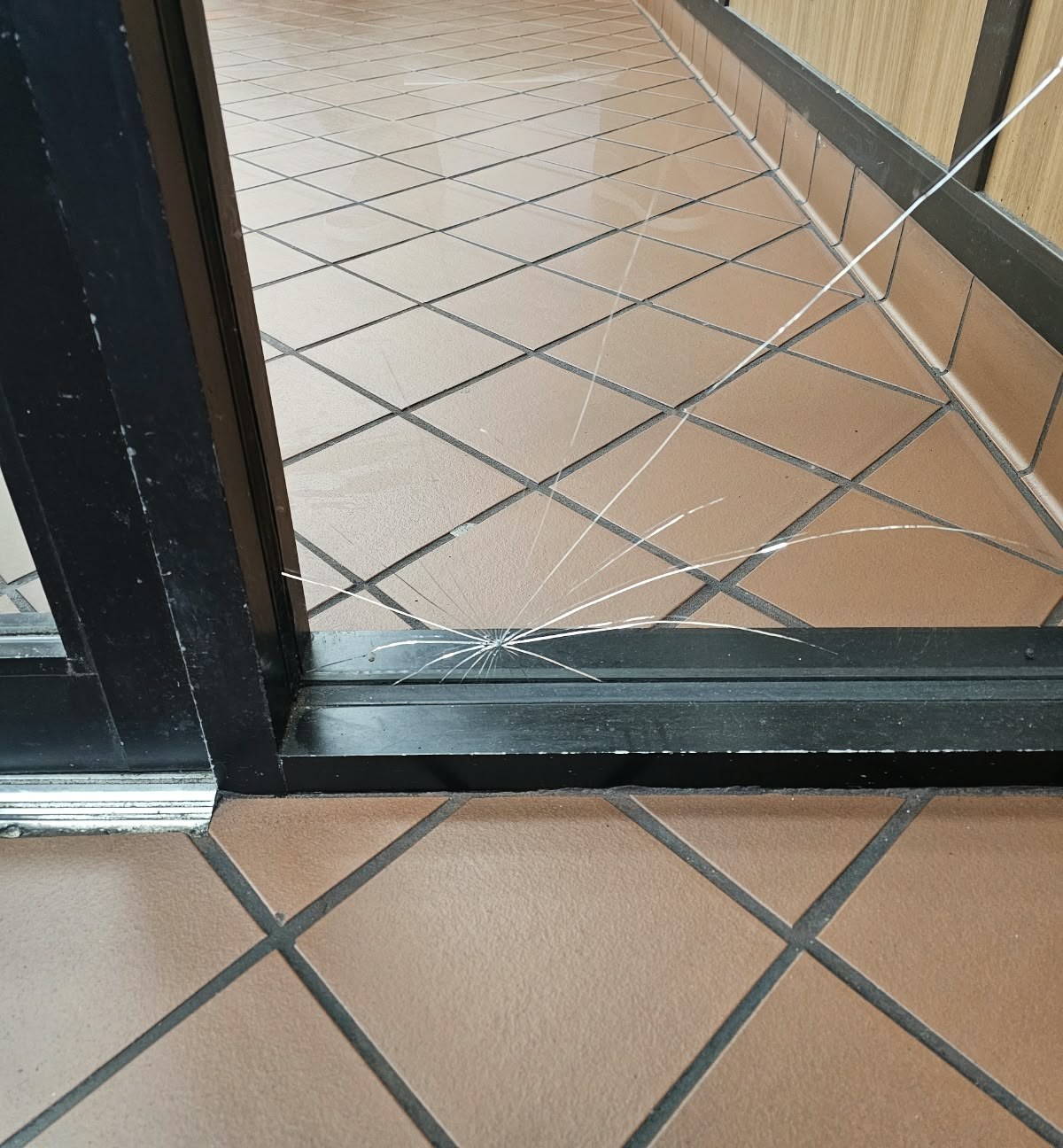
The call was for two things most storefront owners recognize: a cracked pane in the storefront and a door that no longer seals. The crack starts at the bottom rail, which is where storefront glass usually fails: a blow to the frame, a setting block that has shifted so the glass sits on metal, or the pane pinched by a stop that was never set with the right clearance. Once the crack runs, the pane has to come out.
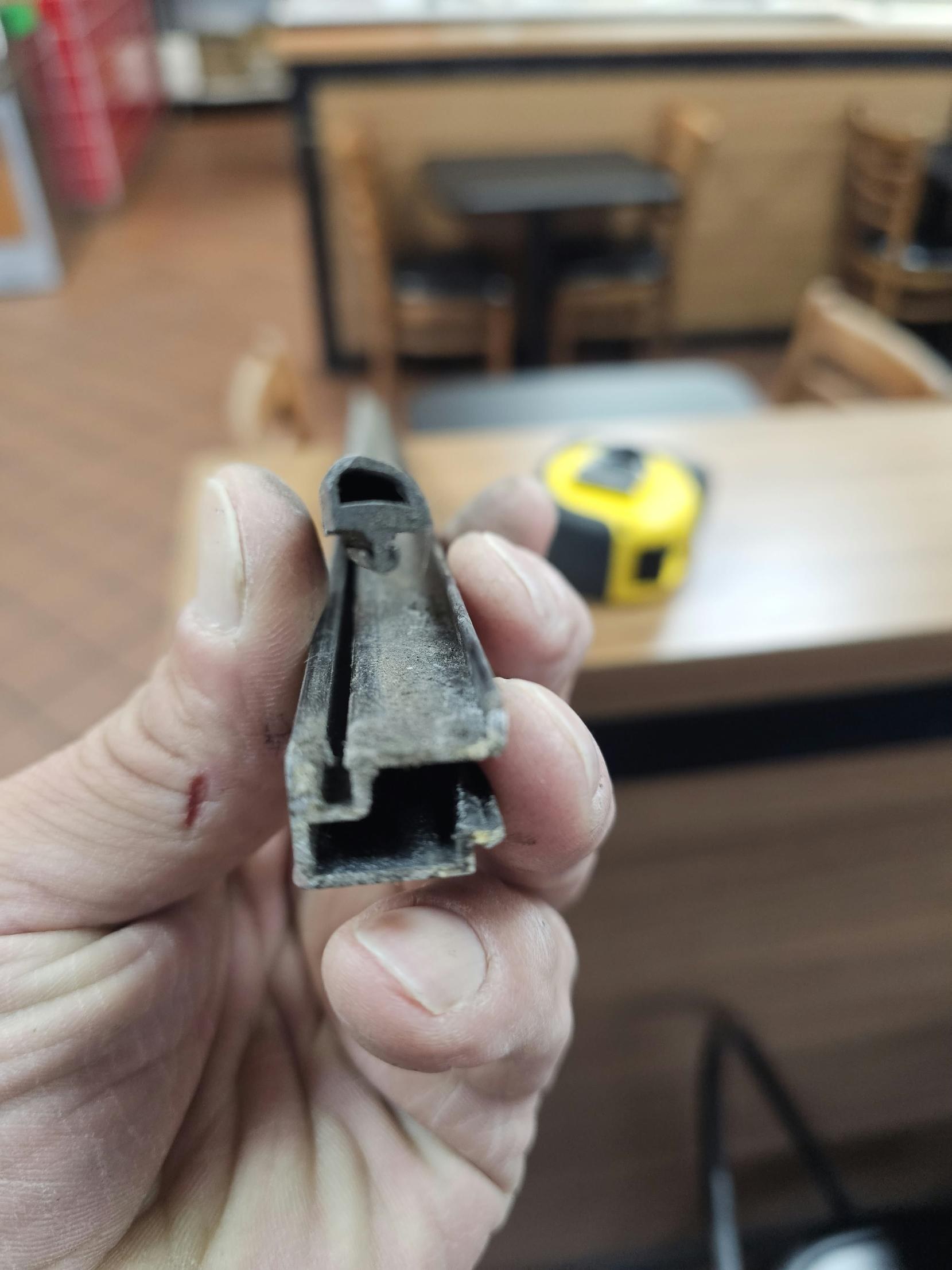
The door was the second item. Its glazing gasket, the rubber profile that holds the glass in the door stile and keeps air and water out, had hardened and shrunk. Old gasket lets the glass rattle, lets air in around the glass, and is often the reason a door feels drafty even when the weatherstripping at the edges is fine.
When we are on a service call we look at the whole front, not just the item we were called for. Here the storefront framing itself is sound: square, anchored, no corrosion, and the finish is good. What is in the frame is the problem. The whole front is glazed with 1/4" monolithic glass, which was standard when it was built and is the reason the space is loud and expensive to heat and cool. In a restaurant or shop on a busy street, single glass is the weak point for both noise and energy.
The door has the same issue plus the worn gasket, a closer that is past adjustment, and a sweep that no longer meets the threshold. See storefront repair for the range of problems we handle on a service call.
Our strong recommendation to the owner is to replace the 1/4" glass across the front with 1" insulated glass units and to keep the existing storefront. The framing is good; what the building needs is better glass. A 1" IGU with a low-E coating cuts heat loss substantially, keeps the inside face of the glass warmer in winter, and with a laminated outer pane it acts as soundproof glass against the street. The tenants get a quieter dining room and lower utility bills without the cost and disruption of a new storefront.
| Existing 1/4" monolithic glass | 1" insulated glass unit (IGU) | |
|---|---|---|
| Make-up | One pane, 1/4" tempered | Two panes with a sealed air or argon space; 1/4" + 1/2" space + 1/4", laminated outer pane for sound |
| Energy | No insulation; cold inside face in winter, heat gain in summer | Roughly half the heat loss of single glass with a low-E coating; less condensation, lower HVAC load |
| Sound | Street noise passes almost unchanged | Noticeably quieter; a laminated pane adds more, see acoustic glass |
| Framing | Fits the existing 1/4" pocket | Needs a 1" glazing pocket: new stops or adapters in the existing frame, or a new frame |
| Safety | Tempered or laminated required at a door and sidelights | Same; the IGU is built with tempered or laminated panes |
Fitting 1" glass into a frame built for 1/4" means changing the glazing pocket. On most storefront systems that is done with new glass stops and adapters that convert the pocket, with new gaskets and setting blocks; the frame stays where it is. We confirm the system first, because the adapters have to match the profile. Where a frame cannot take a 1" unit we say so and price the alternative.
The door is the decision point. If we can identify the manufacturer of the existing door from its profile and hardware, we can keep it: order the matching glass stops for a 1" unit, new glazing gaskets, a new door closer and sweep, and glaze a new IGU into the existing leaf. That is the lower-cost path and it keeps the door matching the frame.
If the brand cannot be identified, or the stops for a 1" unit are no longer made for it, the door is replaced with a new commercial storefront door in the same opening, pre-glazed with a 1" IGU, with a new closer and hardware. Either way the owner gets a door that seals, closes properly and matches the new glass in the front.
Most storefront door problems are cheaper to fix early. Once a year, check:
We offer this as a service visit for commercial buildings; see property maintenance services.
We handle commercial storefront glass replacement, door repair and gasket replacement across the five boroughs of New York City, Long Island, northern New Jersey and the Jersey Shore, with our own crews and our own glass shop. Emergency board-up and glass replacement are available for broken storefronts; planned upgrades like the IGU conversion described here are surveyed first and scheduled around the business's hours.
Usually yes. The frame is kept and the glazing pocket is converted with new stops and adapters to take a 1" unit. We confirm the system first; a few frames cannot take it, and we say so.
Yes. A sealed double unit is noticeably quieter than single 1/4" glass, and a laminated pane in the unit makes it quieter again. For a restaurant or office on a busy street it is the single biggest improvement available without a new front.
The glass stops are removed, the old gasket is pulled, the glass is reset on new setting blocks with new gasket on both sides, and the stops are refitted. If the door is being converted to 1" glass, the stops are replaced with ones sized for the unit.
If the manufacturer can be identified and parts are available, repair: new gaskets, stops, closer and glass. If not, or if the leaf is bent or corroded, replace it with a new commercial door in the same opening.
Tempered or laminated glass is made to size, so a cracked pane is usually boarded or taped the same day and replaced when the glass arrives. Call with a photo and the rough size.
Storefront repair Insulated glass units Soundproof glass Acoustic glass Storefront doors Property maintenance services Storefront door design: stiles, pulls, closers
About this page. Written by Alex GC Inc. d/b/a Alex Glass Construction and reviewed before publication by Aleksandr Chernovolenko, Managing Partner, with our design and estimating lead and a field foreman. Our foremen hold the NYC DOB Site Safety Training supervisor card and our crews the 40-hour worker card; we are certified to fabricate, install and service Alutech and Everest aluminum systems. Facts are drawn from our own projects, manufacturer test data and the applicable codes; where we are giving an opinion, we say so. Last reviewed September 2026. Credentials
Send a photo of the glass or the door and the address. We will replace the glass, service the door, and tell you whether the front can take insulated glass.