On a flush aluminum entrance door the shadow line around the leaf is the detail. Here is what the drawing calls for, how it is measured, and how the hinges are set on the Somerset, NJ house.
In short: the last step on a large aluminum entrance door is not the lock or the handle. It is lining the leaf up in its frame so that the gap around it matches the manufacturer's drawing on all four sides, inside and out. On the Somerset, NJ house that meant 5 mm and 6 mm, measured with a caliper, not by eye.
The front door at the Somerset house is a tall flush aluminum entrance door in black, with a full-height stainless pull and a fingerprint reader in the leaf. A door like this has no stile-and-rail pattern to hide behind: it is one flat panel in a flat frame, and the shadow line around it is the only detail. If that line is wider on one side than the other, or wider at the top than at the bottom, it shows from the sidewalk.
A heavy leaf on multi-point hardware also has to close against its seals evenly. Too tight on one side and the door binds and the lock points do not throw cleanly; too loose and the seal does not compress and the door whistles in wind. The gap is therefore not cosmetic. It is the setting that makes the lock, the seals and the appearance all work at once.
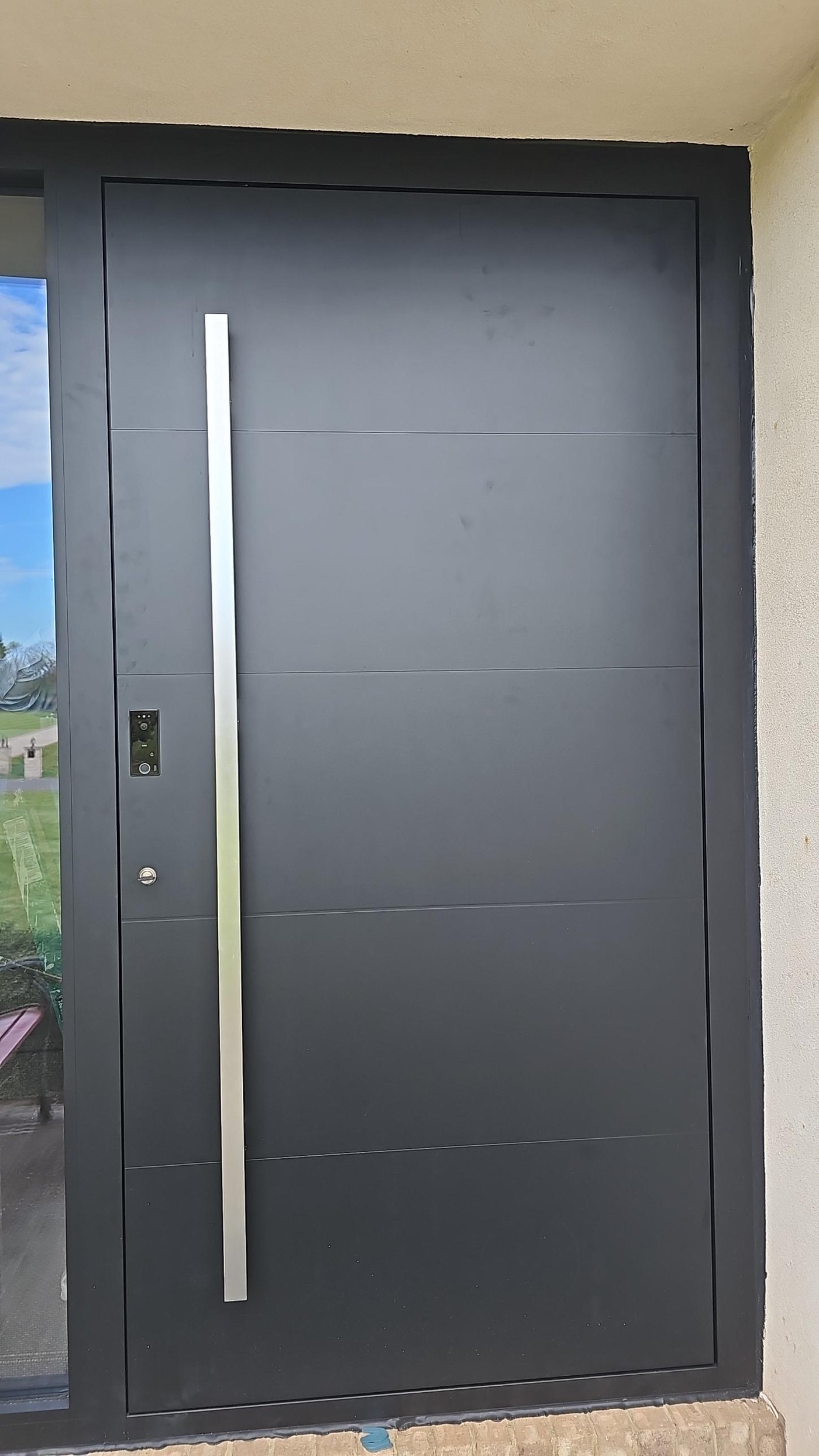
The system manufacturer publishes section drawings for the door with the gap between leaf and frame dimensioned on each side. For this door the drawings call for the following, with the interior and exterior gaps different because the leaf and frame profiles step:
| Location | Interior gap | Exterior gap | Note |
|---|---|---|---|
| Handle side | 5 mm | 6 mm | 2.51 mm between the interior panel and the interior frame |
| Hinge side | 5 mm | 6 mm | Same gaps as the handle side so the leaf sits centered |
| Top | 5 mm | 6 mm | Checked against the head of the frame |
| Bottom | 6 mm | 5 mm | Reversed at the threshold: 6 mm inside, 5 mm outside |
The sections below are the manufacturer's details marked up for the crew: handle side, bottom, hinge side and top, each with the interior and exterior gap called out.
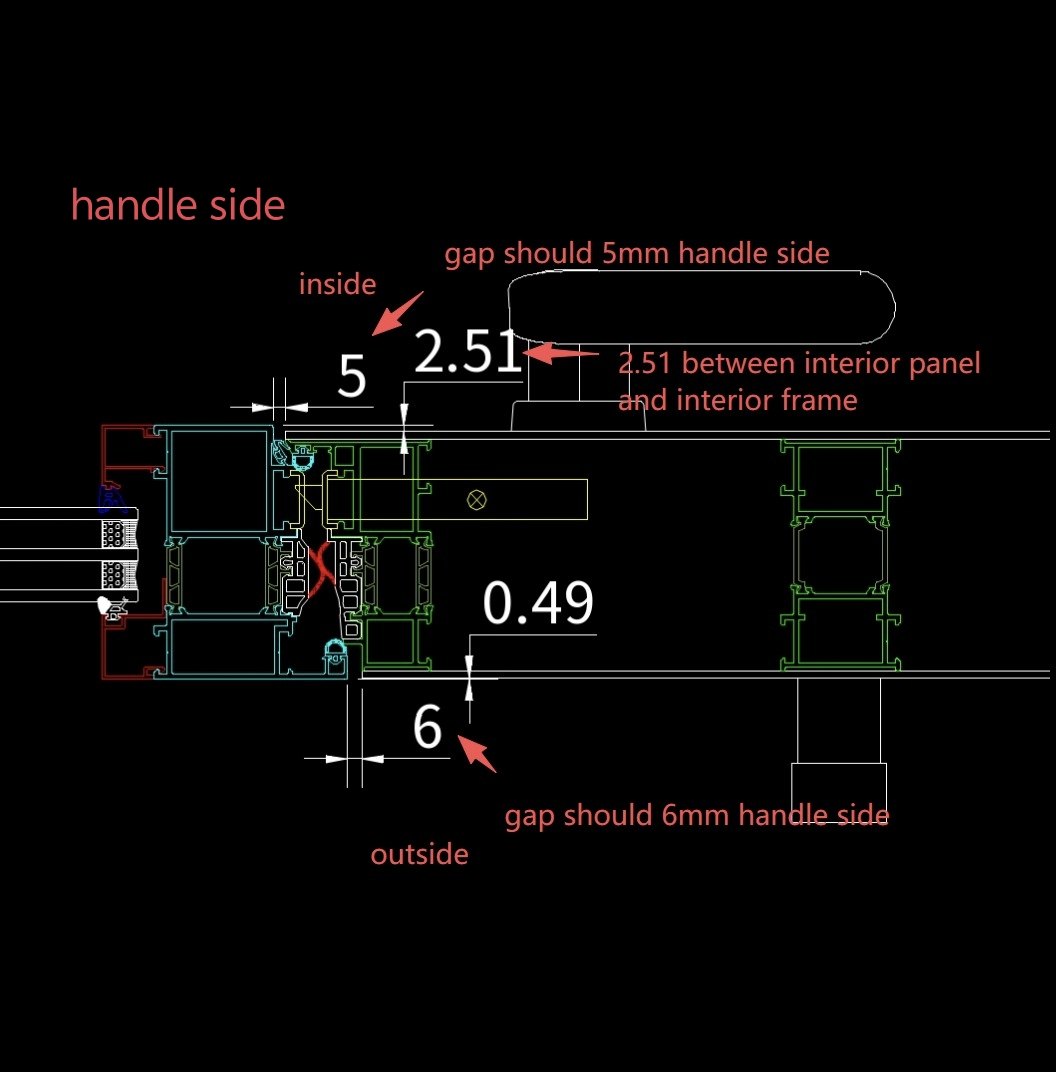
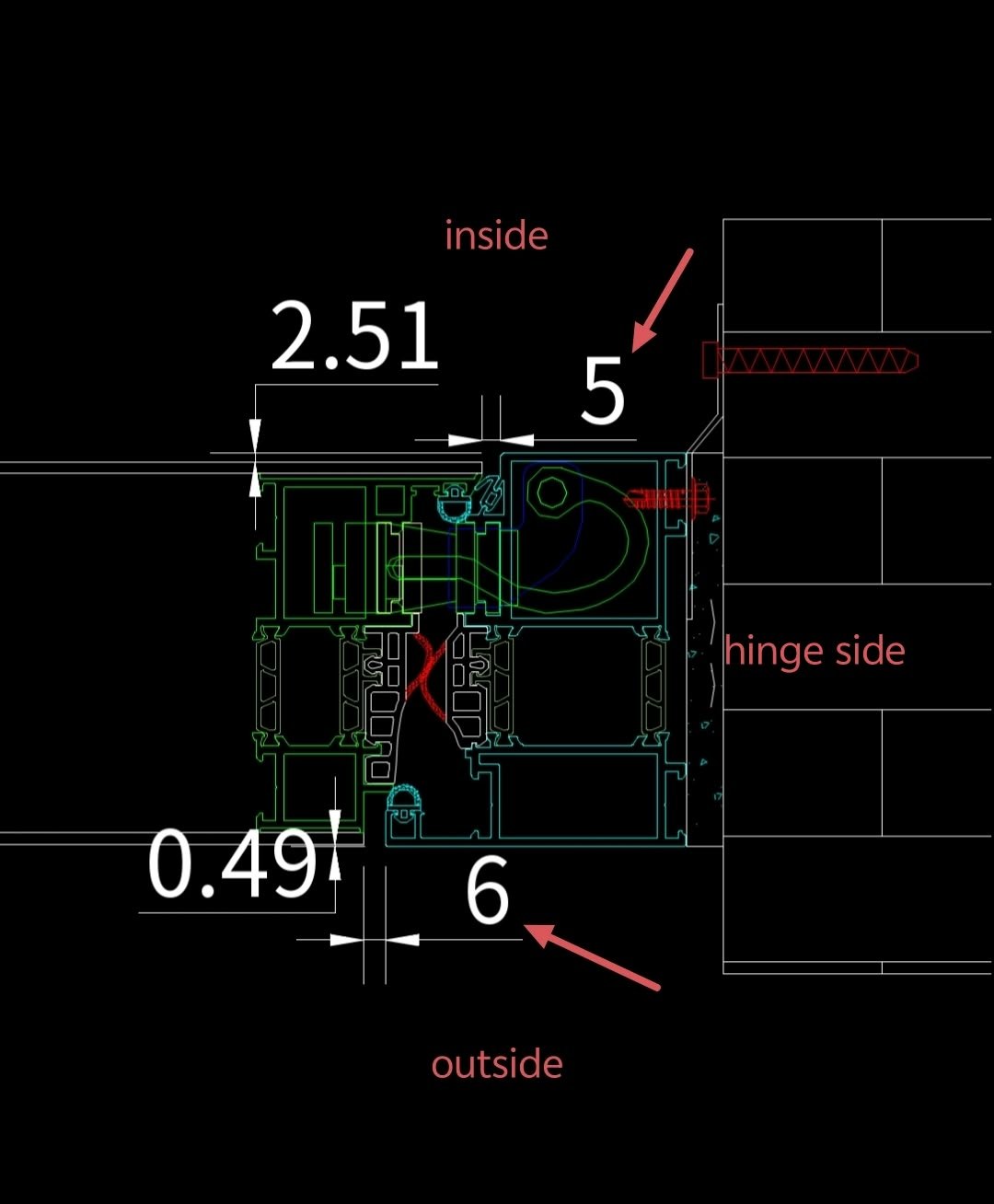
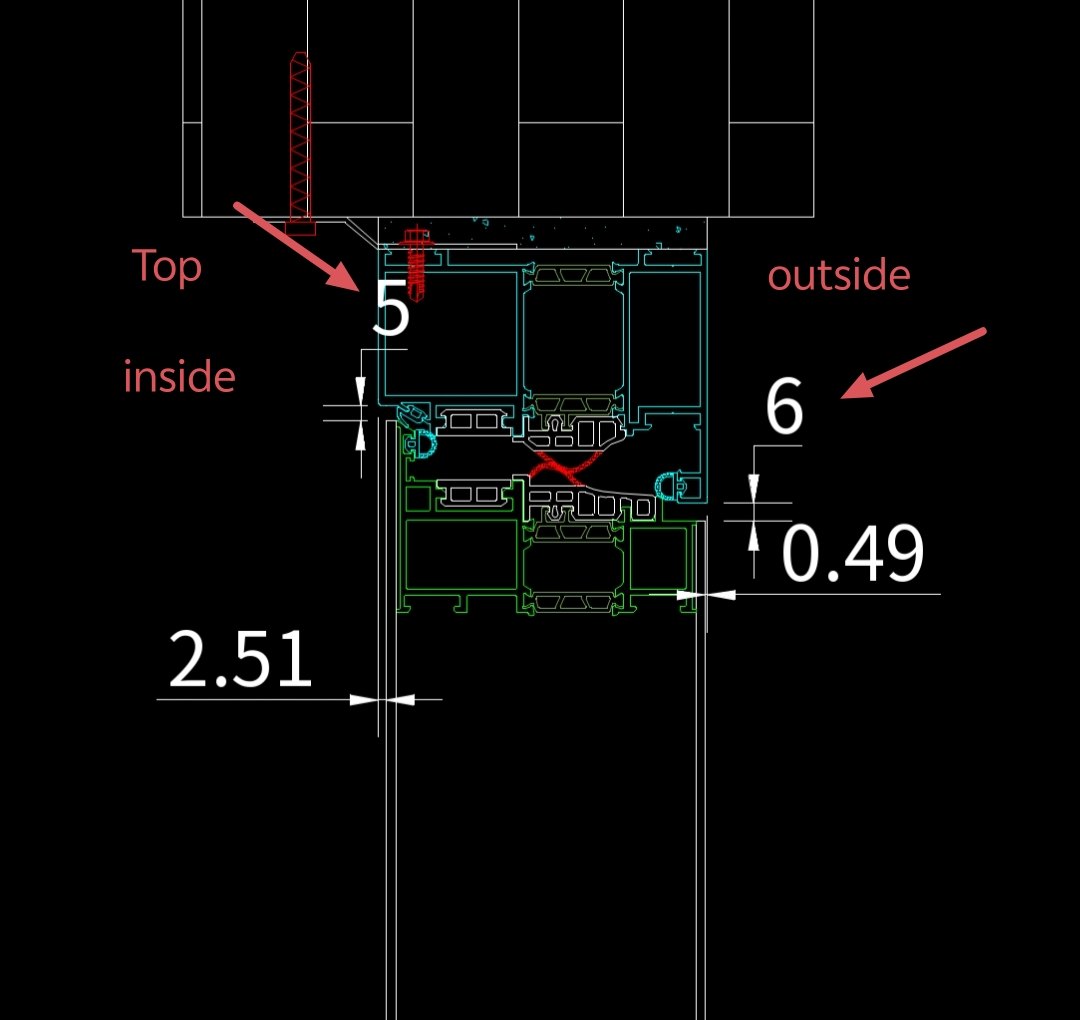
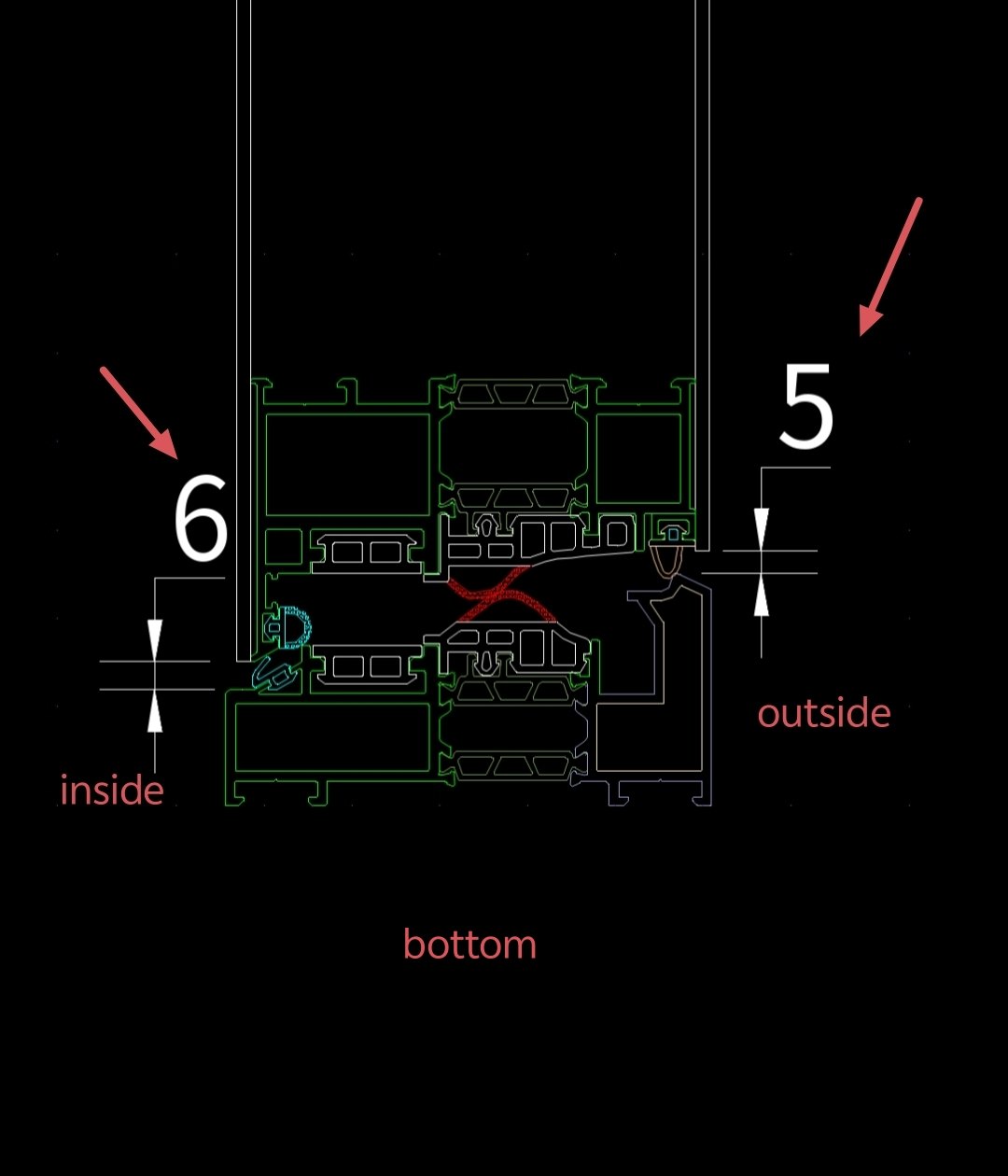
A millimeter is hard to judge by eye on a black door, so the gaps are measured with a digital caliper at several points on each side, with the door closed and latched. The caliper reads in fractions of an inch; 5 mm is just under 13/64", and 6 mm is just under 1/4". Readings of 7/32" (5.6 mm) and 17/64" (6.7 mm) tell the crew where the leaf is within about half a millimeter of the target and where it still needs to move.
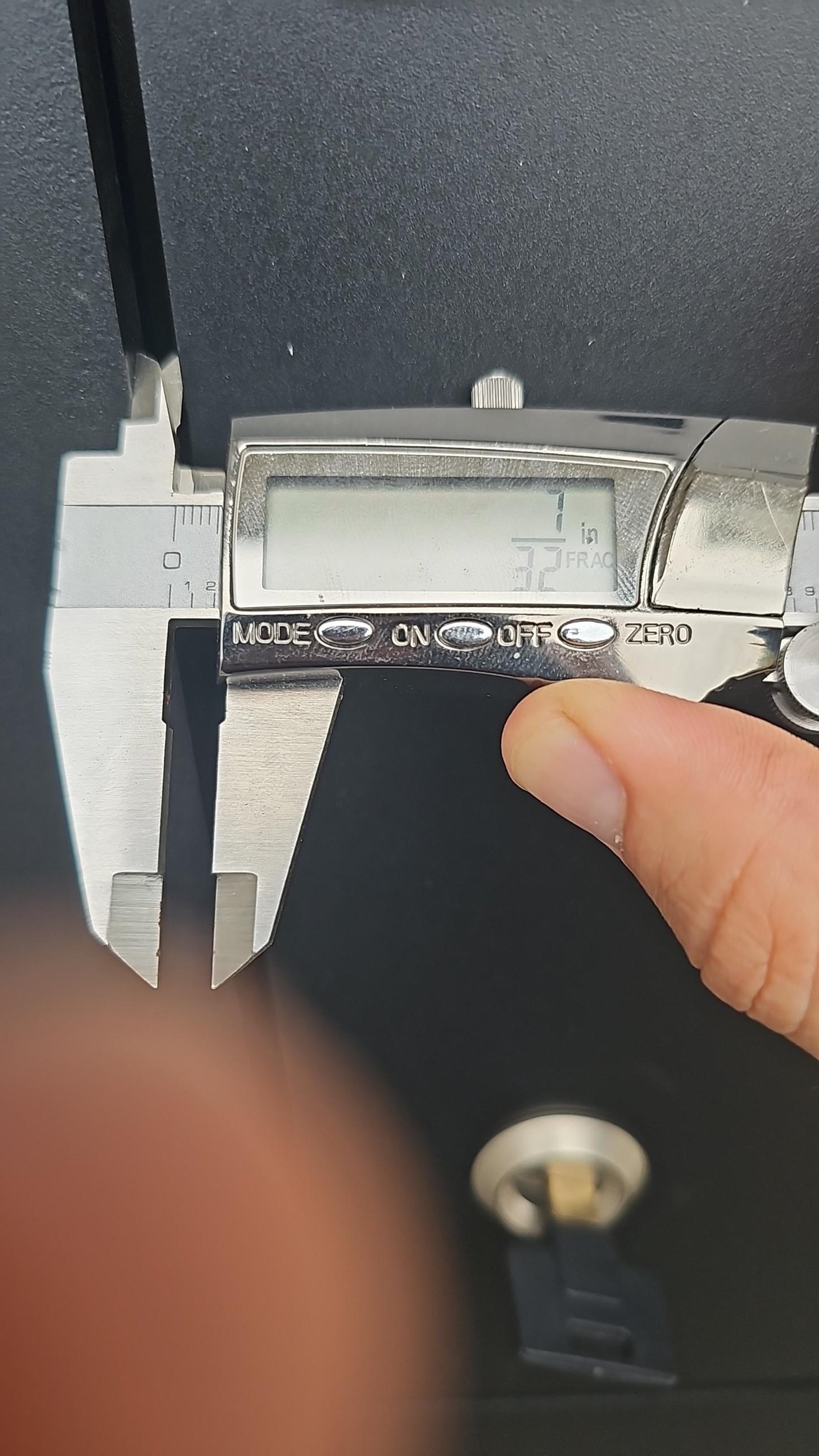
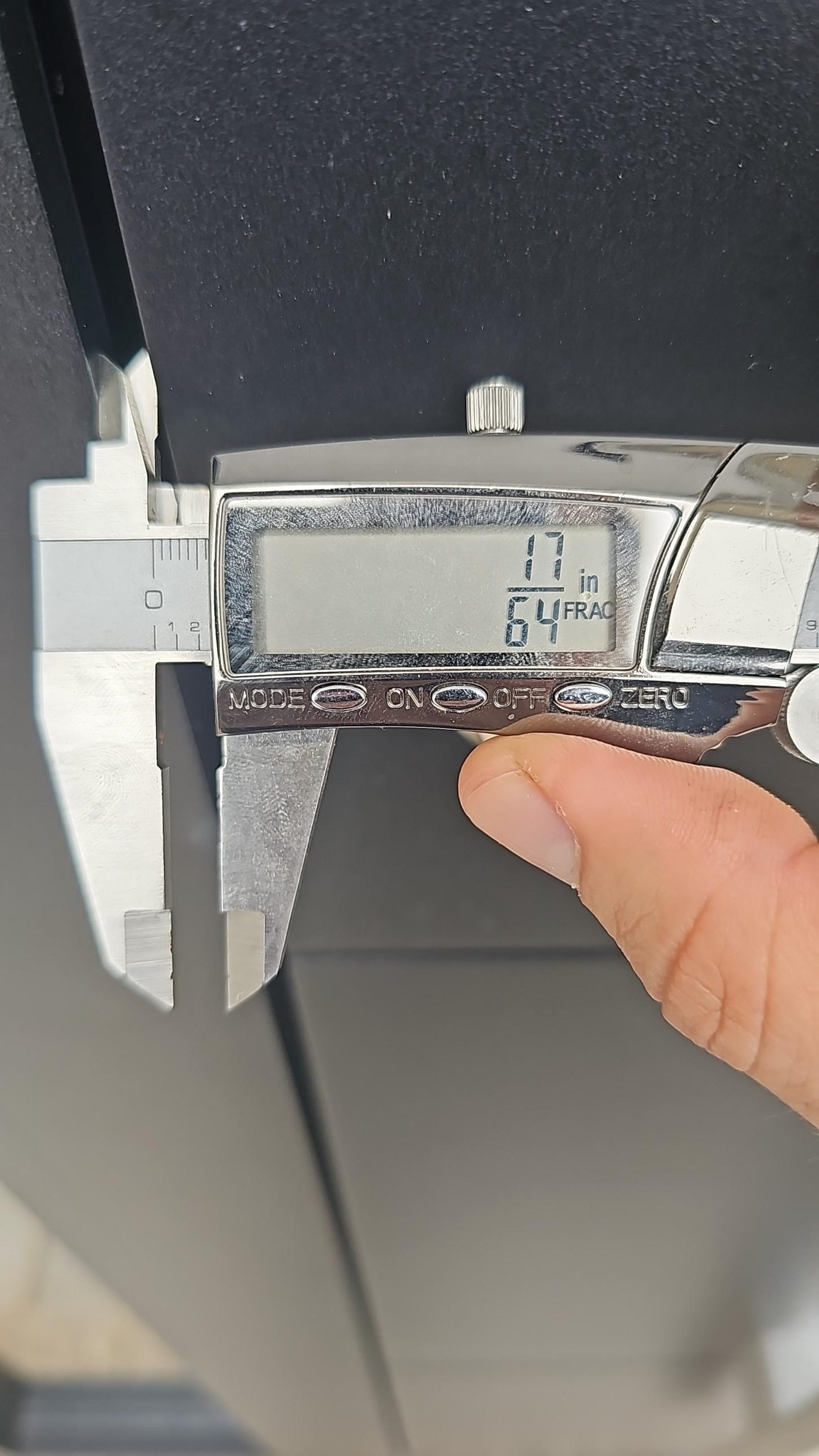
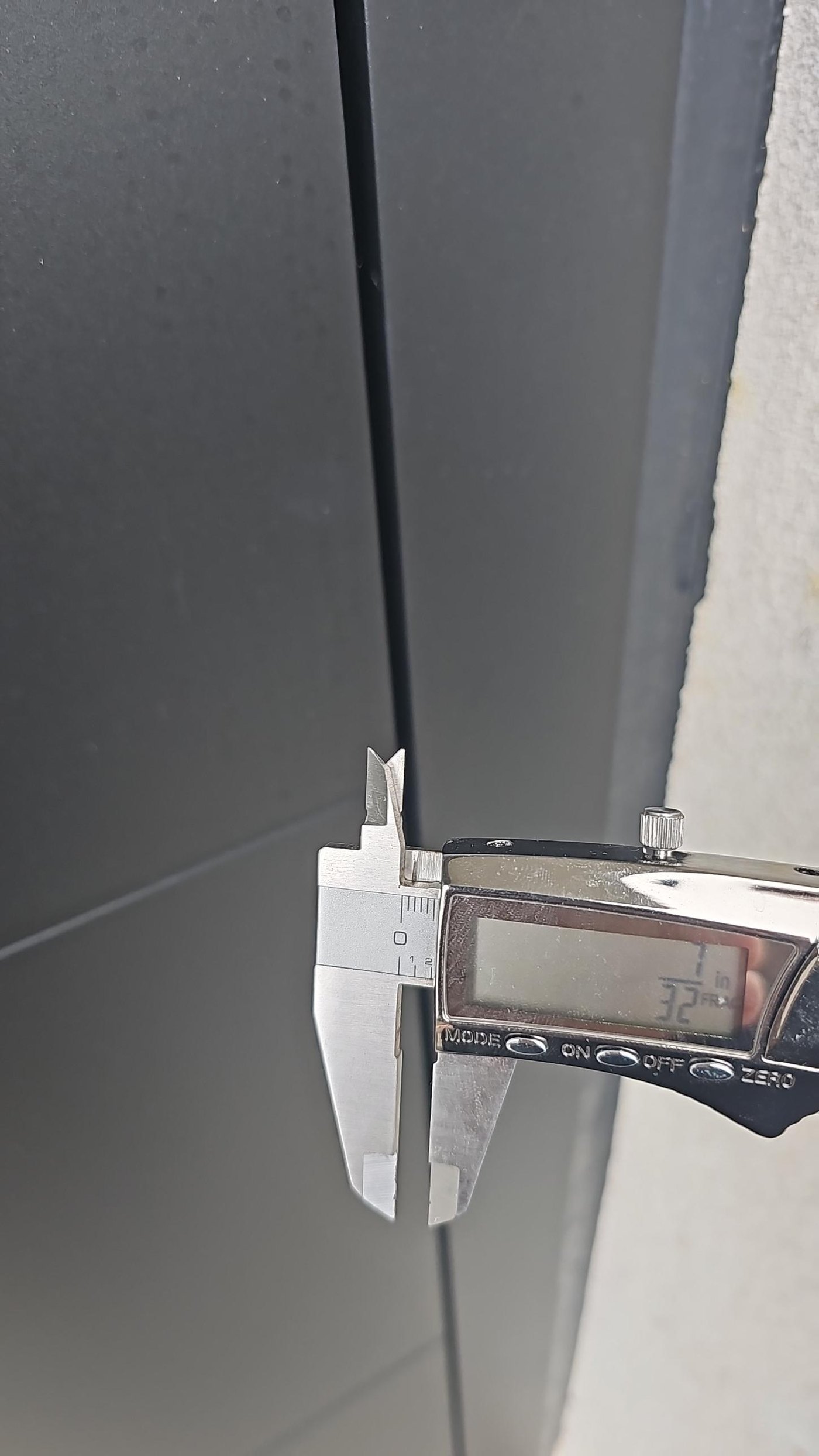
The adjustment itself is done at the hinges. The hinges on this system adjust in three directions: side to side to center the leaf between the jambs, up and down to set the top and bottom gaps, and in and out to set the compression on the seals. Each change on one hinge moves the gap on the opposite corner, so it is done in small steps, measured, and repeated until all four sides read to the drawing. Then the lock keeps and the strike are set so the multi-point bolts throw without lifting or pulling the leaf.
The door is hung early so the house can be closed in, but the final alignment waits until the finishes around it are complete. Stone, stucco and flooring work around an opening disturbs the frame slightly, the threshold is only final once the floor is in, and a heavy leaf settles a little on its hinges in the first weeks. Aligning it before that would mean doing it twice. The fingerprint reader and the handle are the parts the owner sees; the gap is the part that makes them work. See premium entrance doors for the systems we install.
Whatever the manufacturer's section drawing specifies. On this door it is 5 mm interior and 6 mm exterior on the sides and top, and 6 mm interior and 5 mm exterior at the bottom. Other systems differ, so the drawing is checked, not a rule of thumb.
At the hinges, which adjust side to side, up and down, and in and out. The gaps are measured with a caliper on all four sides, the hinges are moved in small steps, and the lock keeps are set last.
A one-millimeter difference is visible on a flush black door but hard to judge by eye, and the seals and multi-point lock depend on it. The caliper gives a number to work to.
After the finishes around the opening are complete and the threshold is final, so the frame is in its final position and the adjustment does not have to be repeated.
Yes. The multi-point lock throws cleanly only when the leaf sits square in the frame with the seals compressed evenly. Alignment is done before the lock is set.
Somerset, NJ: windows and fingerprint-entry door Premium doors Installation services Aluminum windows New Jersey windows, doors and glass Request a quote
About this page. Written by Alex GC Inc. d/b/a Alex Glass Construction and reviewed before publication by Aleksandr Chernovolenko, Managing Partner, with our design and estimating lead and a field foreman. Our foremen hold the NYC DOB Site Safety Training supervisor card and our crews the 40-hour worker card; we are certified to fabricate, install and service Alutech and Everest aluminum systems. Facts are drawn from our own projects, manufacturer test data and the applicable codes; where we are giving an opinion, we say so. Last reviewed September 2026. Credentials
Send a photo of the door and the gap, and tell us the system if you know it. We align, adjust and service aluminum entrance doors across New Jersey and New York.