Windows installed over a year ago with no complaints were blamed for water inside. The building waterproofing membrane applied afterward was never sealed to them, and its glue line failed.
In short: we were called to a building still under construction in Woodmere, NY, for "leaking windows," more than a year after we installed them with no complaints. The windows were not leaking. The building waterproofing membrane, installed after the windows, was never sealed to them, and the glue line at its edge had failed. Water collected behind the membrane and came out inside. Leaking windows are the easiest thing to blame; they are often not the cause.
The call came from a property still under construction in Woodmere, on Long Island's South Shore: water inside at several windows after rain. The windows had been installed over a year earlier, with their own waterproofing at every opening, and there had been no water problem in that time. That history matters. A window that was dry through a year of weather does not usually start leaking on its own; something around it has changed.
On site the answer was visible in minutes. Since our installation, the contractor had applied the building's waterproofing membrane across the walls. Where that membrane meets the window openings it has to be lapped and sealed onto the window flashing so that water running down the wall is carried over the window, not behind it. That was not done. The membrane was simply run up to the windows and stopped, and the glue line along its edge has failed.
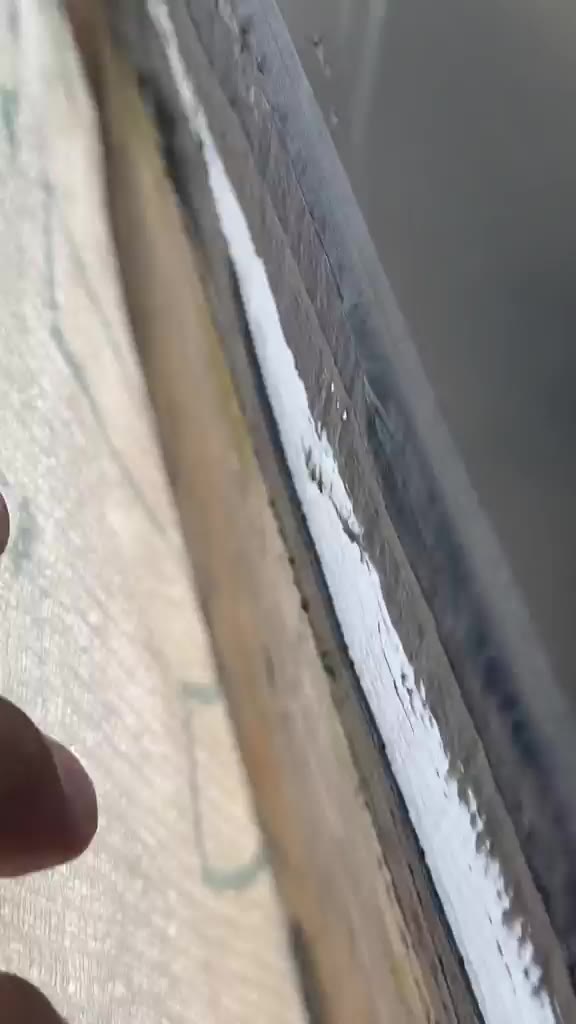
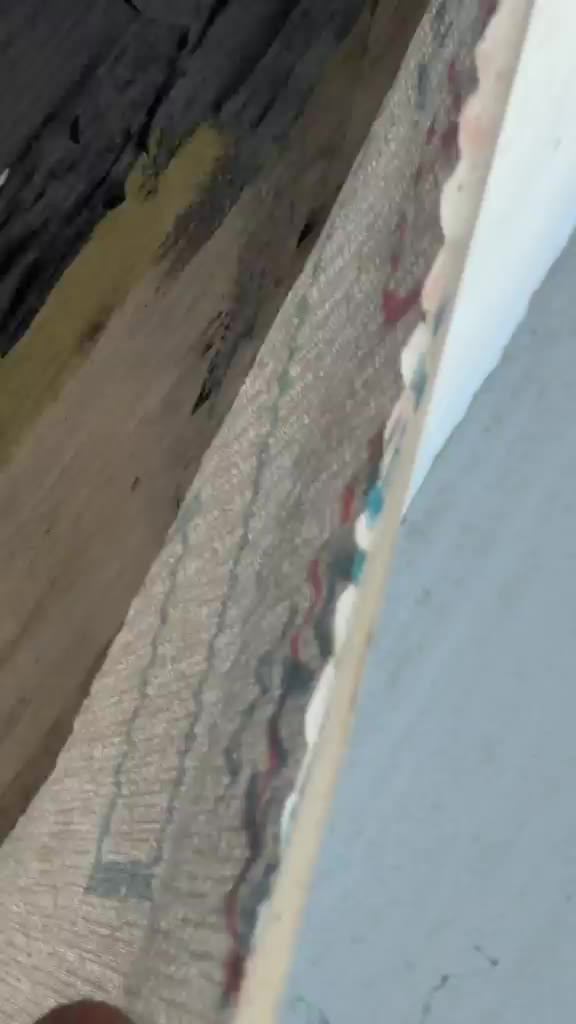
In the video: the window jamb with its own flashing membrane, and beside it the edge of the building waterproofing. The glue line along that edge has let go, and the membrane can be lifted away from the wall by hand. Water that should have run down the outside of the membrane has been running down behind it instead.
Waterproofing works as a shingle: every layer laps over the one below it, and every edge is sealed, so water always has a path down and out. The sequence on this building broke that rule.
Inside, the water showed up at the windows, because the window opening is the first break in the wall where trapped water can escape. That is why the complaint was "leaking windows." The windows were the messenger, not the leak.
When water appears at a window, the window gets the blame. It is the visible thing in the wall, and the installer is the easiest trade to call. In our experience, on new construction, most water problems at windows are not the window or its installation but the work done around it afterward: the building wrap or membrane not lapped onto the flashing, a parapet or sill cap installed without a seal, a cladding sub-sill that drains inward, or a penetration cut through the membrane above the window and left open.
The way to tell is history and sequence. A window that was dry and then starts to leak after other trades have worked on the wall is almost always a detailing problem in that later work. A window that leaks from the first rain may be the window. We say this not to deflect; when our installation is at fault we fix it. But the fix has to go where the water is actually coming in, or the building will be opened up twice.
When the window is installed before the wall membrane, as here, the membrane installer has to tie into the window flashing with the same laps and sealed edges. That is the detail that was missed. See our waterproofing page and the note on new construction window installation.
The products matter less than the detailing, but it helps to know what each one is and how its edges are meant to be closed:
On any of them the rule is the same: the building membrane laps over the window flashing, every edge is closed, and the whole opening is checked before the cladding goes on. A membrane that is not tied into the window is not waterproofing the window, whatever the brand.
The repair is to open the cladding at the affected openings, dry the sheathing, cut back the failed membrane, and re-lap new membrane over the window flashing with primed, rolled and sealed edges, then close up. The windows stay. Where the sheathing has been wet for a season it is checked and replaced if it has softened. We can do this work, and we can inspect a building before the cladding closes so the tie-in is caught while it is still cheap to fix.
We inspect and repair water problems at windows, doors and storefronts across Long Island, including Woodmere, the Five Towns, Long Beach and the rest of Nassau County, the five boroughs of New York City, northern New Jersey and the Jersey Shore, on new construction and on existing buildings. On new construction we recommend a pre-cladding inspection of every window tie-in; it costs a visit and saves opening the wall later.
Often not. If the windows were dry and the leak started after waterproofing, cladding or roofing work around them, the cause is usually that later work not being sealed to the window flashing. Check the sequence before blaming the window.
Blueskin is a common brand of self-adhered rubberized asphalt membrane used to flash window openings and waterproof walls. The name is often used for any peel-and-stick flashing membrane. It works only when the substrate is primed and every edge is rolled and sealed.
Self-adhered membrane edges lift when the substrate was not primed, the edge was not rolled, the membrane was applied in cold or on a dusty surface, or the edge was left exposed without a sealant bead. Once lifted, water gets behind the membrane.
Yes, but it is harder. The membrane has to be cut back and new flashing lapped so the building membrane ends up over the window flashing, not under it. Doing it in the right order the first time is cheaper.
Yes. We recommend an inspection after the windows are flashed and again after the wall membrane is applied, before cladding, so tie-ins are checked while they are still accessible.
Waterproofing Good and bad membrane adhesion New construction window installation Installation services Window replacement Request an inspection
About this page. Written by Alex GC Inc. d/b/a Alex Glass Construction and reviewed before publication by Aleksandr Chernovolenko, Managing Partner, with our design and estimating lead and a field foreman. Our foremen hold the NYC DOB Site Safety Training supervisor card and our crews the 40-hour worker card; we are certified to fabricate, install and service Alutech and Everest aluminum systems. Facts are drawn from our own projects, manufacturer test data and the applicable codes; where we are giving an opinion, we say so. Last reviewed September 2026. Credentials
Send photos of the inside and outside of the opening and tell us what work was done around the windows since they went in. We will find where the water is actually coming from.