The one piece of window flashing that assumes the window will leak, and makes sure the leak goes outside. If a window installation has a single most important detail, this is it.
In short: A sill pan (sill flashing, pan flashing) is a waterproof tray formed in the bottom of a rough opening before the window or door goes in. It has a back dam, an upturned edge on the room side, and end dams, upturned edges at each jamb, and its bottom is sloped toward the outside. Any water that gets past the window, through a failed gasket, a frame corner, a weep that backs up or the joint between frame and wall, lands in the pan and is directed out over the exterior face of the wall instead of into the framing, the insulation and the finish below. It is made of self-adhered membrane, formed sheet metal or a preformed plastic pan, and it is required by the manufacturer's installation instructions of every window we install. A window set on a bare sill with a bead of sealant has no second line of defense; most of the leaks we are called to are at the sill, and most of those have no pan. Call 929-235-1233 or request a free quote.
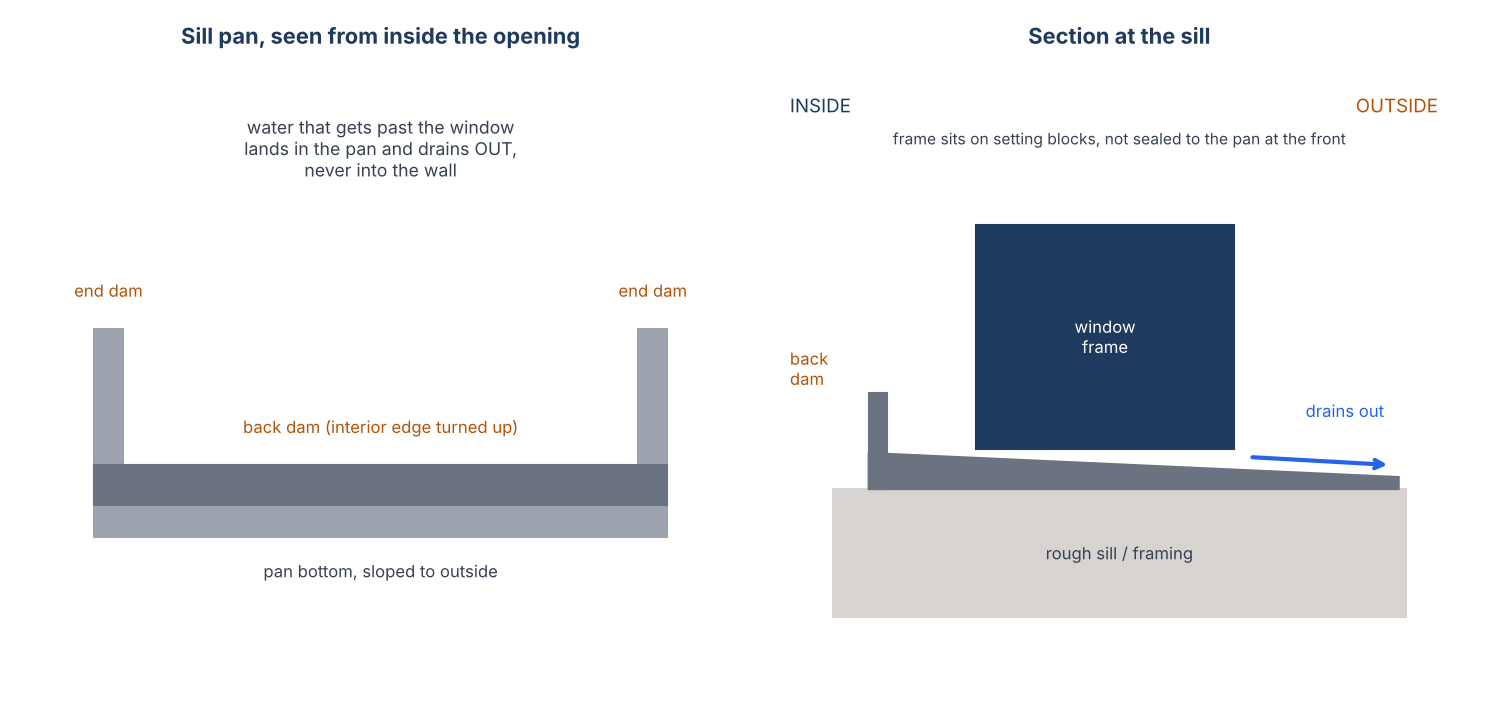
Picture a shallow baking tray with the front edge cut away, set into the bottom of the opening with the open edge to the outside. The three remaining edges are the back dam (inside) and the two end dams (at the jambs). The window sits on setting blocks or shims inside the tray, never sealed to the tray along the front, so that water collecting in the tray drains forward under the frame and out over the sill flashing or the face of the wall. The pan is lapped by the jamb flashing above it, shingle-fashion, so water running down the jambs lands in the pan and not behind it.
The back dam is what most installers skip and what matters most. Without it, water in the pan can run backward into the room under the frame, which is the puddle on the interior sill that owners report. A back dam of 1/2 inch is the minimum; on balcony doors with a terrace outside it should be higher.
| Material | How it is made | Best for | Watch for |
|---|---|---|---|
| Self-adhered membrane (butyl or asphalt) | Cut and folded on site into the opening, corners patched or boots added | Wood-framed and sheathed openings on new construction and replacement | Must bond to a clean, flat, primed substrate; wrinkles and fishmouths are leaks; see preparing the opening |
| Formed sheet metal (aluminum, stainless, copper) | Bent to the opening with soldered or sealed corners, end dams and back dam | Masonry openings, commercial storefront, long sills, terrace doors | Corners must be watertight; isolate aluminum from mortar and dissimilar metals |
| Preformed plastic pan | Molded PVC or ABS, telescoping to width, with integral dams | Standard residential sizes, fast installation | Limited sizes; corners of the opening must be square |
| Liquid-applied flashing | Trowel- or gun-applied membrane forming a seamless pan | Irregular masonry, old openings, retrofit | Needs the right thickness and cure time; back dam has to be built, not just coated |
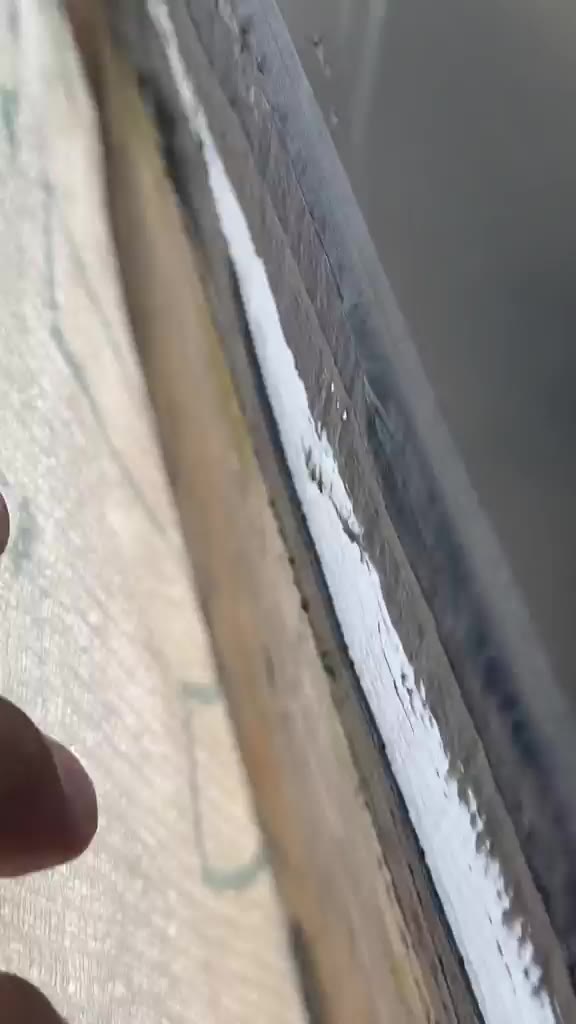
The whole waterproofing sequence, sill pan, jamb flashing, head flashing and the door-threshold version, is in window and door waterproofing types. What happens when the membrane behind it fails is in leaking windows or failed membrane.
On every window and door we install the pan goes in first, is photographed before the frame covers it, and the photograph goes in the closeout file. On a leak call it is the first thing we look for. Request a quote for installation or a leak inspection.
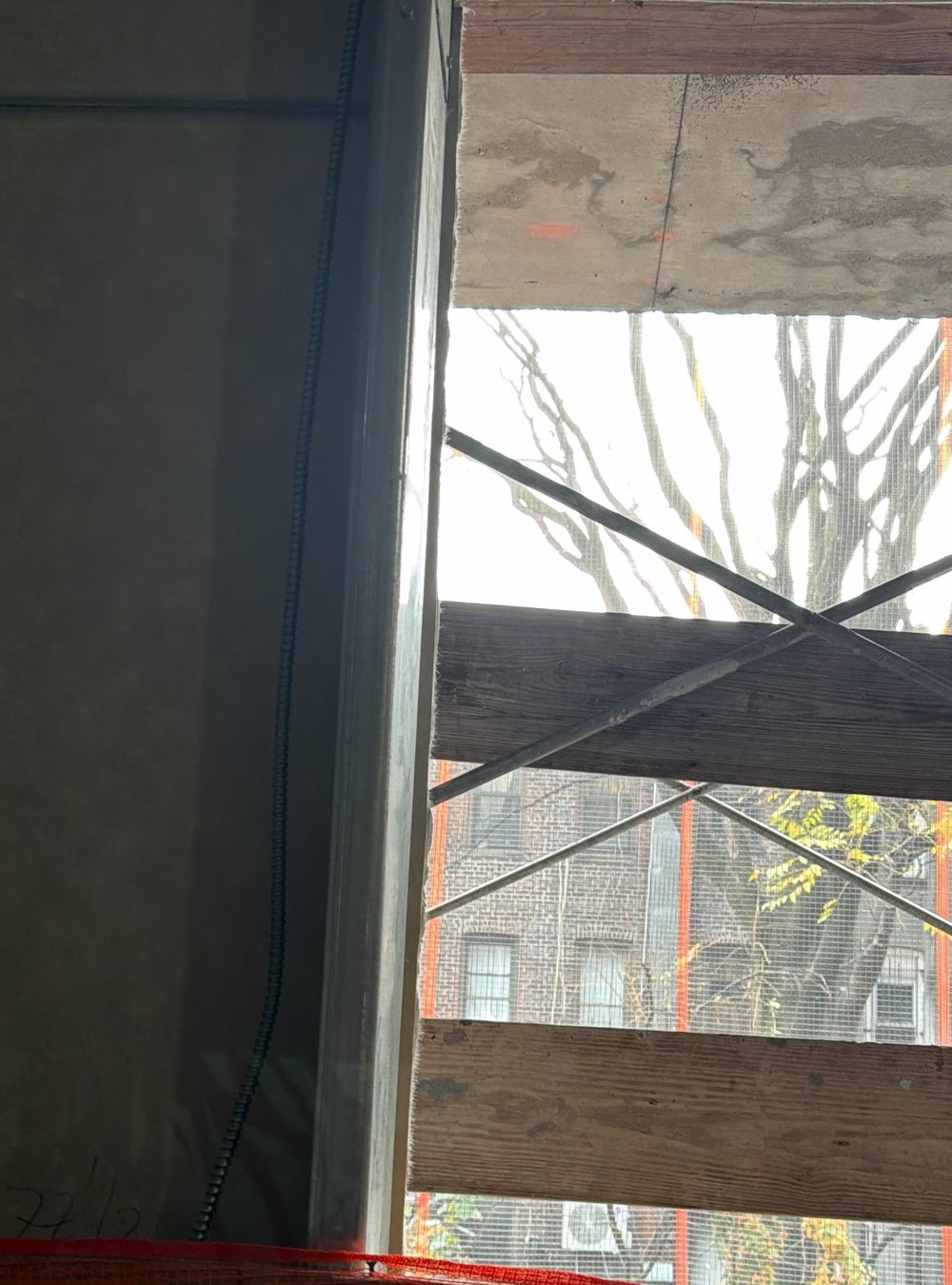
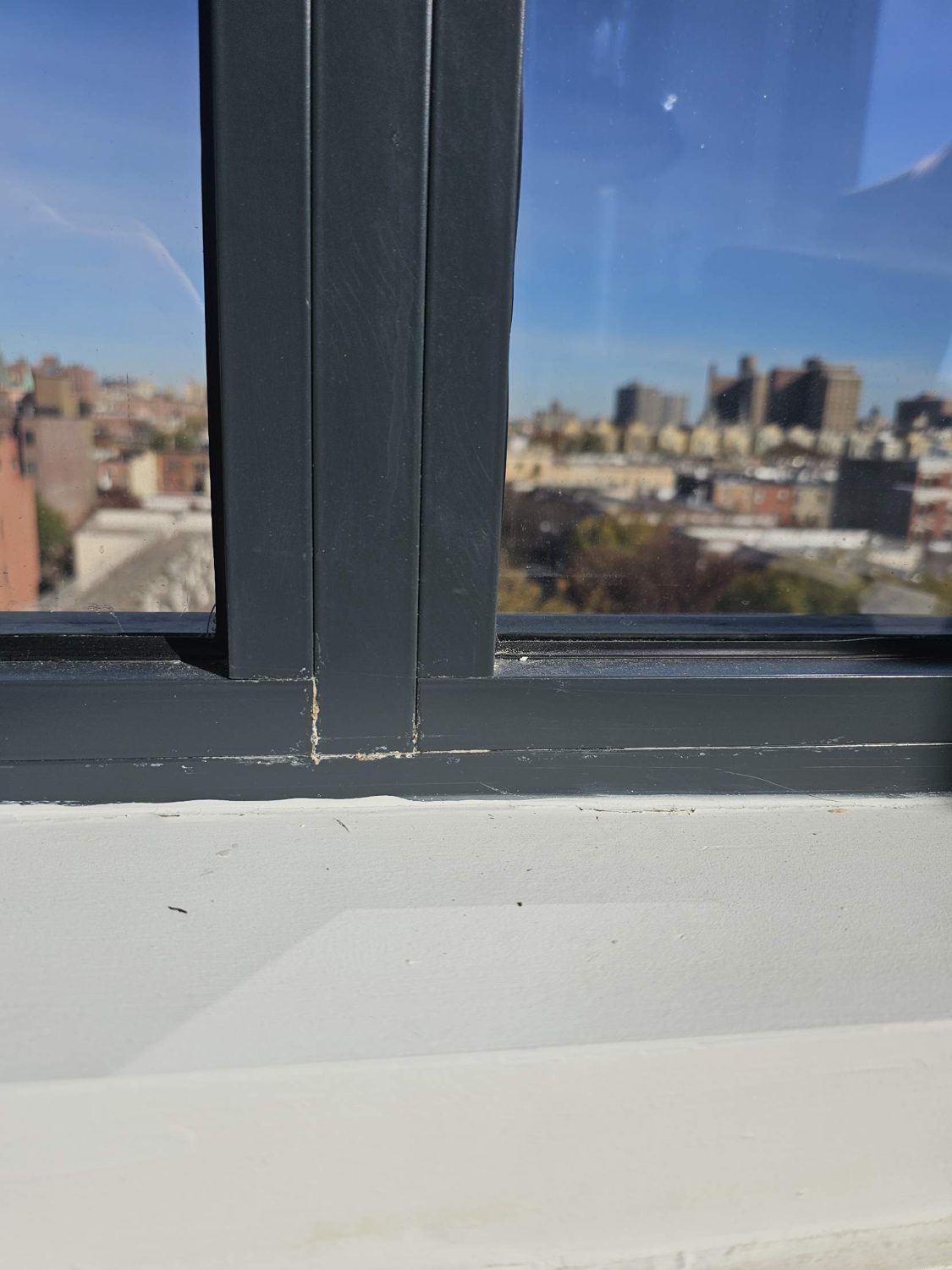
More projects are added to the portfolio as they finish.
A waterproof tray in the bottom of a window or door opening with a raised back edge and raised ends and a sloped bottom, so water that gets past the window drains out over the wall instead of into it.
End dams are the upturned edges of the pan at each jamb; the back dam is the upturned edge on the room side. Together they make the pan a tray with only the outside open.
By the installation instructions of every major window manufacturer, and by the building code's requirement that windows be flashed per those instructions. Skipping it voids the window warranty.
Self-adhered membrane folded into the opening, formed sheet metal with sealed corners, a preformed plastic pan, or liquid-applied flashing. The choice depends on the wall and the opening.
At the back dam and at the ends, through the setting of the frame, but never along the front edge; the front stays open so the pan can drain.
Yes, and it is the most often skipped case. A metal or liquid-applied pan is formed on the masonry sill before the new window is set.
From the installation photographs if the installer took them, or by removing the interior sill trim and looking for the back dam behind the frame. Water on the interior sill after rain usually means there is no pan or no back dam.
Yes, on every window and door, photographed before the frame is set, with the photographs in the closeout file.
Window and door waterproofing types Waterproofing solutions Installation services Window replacement Window leak inspection Balcony doors
About this page. Written by Alex GC Inc. d/b/a Alex Glass Construction and reviewed before publication by Aleksandr Chernovolenko, Managing Partner, with our design and estimating lead and a field foreman. Our foremen hold the NYC DOB Site Safety Training supervisor card and our crews the 40-hour worker card; we are certified to fabricate, install and service Alutech and Everest aluminum systems. Facts are drawn from our own projects, manufacturer test data and the applicable codes; where we are giving an opinion, we say so. Last reviewed November 2026. Credentials
We install every opening with a sill pan, photographed before the frame covers it, and we diagnose sills that were installed without one.