The parts of a glass facade you cannot see through: the opaque lites at every floor that hide the slab, the ceiling plenum and the insulation, and make a building of separate floors read as one sheet of glass.
In short: Spandrel glass is opaque glass set in the same framing as the clear vision glass of a curtain wall, window wall or storefront, placed where there is nothing to see through to: the edge of the floor slab, the ceiling space above a drop ceiling, a mechanical zone, or a solid wall behind the glass line. It is made opaque with a ceramic frit fired onto the back of the glass, a factory-applied opacifier film or paint, or by using a dark or reflective coating, and it is backed by insulation and a metal back pan so the slab edge is sealed and insulated. Because it hides structure, it is almost always heat-strengthened or tempered, and because it sits next to vision glass, matching its color to the vision glass in daylight and at night is the whole art of it. We supply and install spandrel in the curtain wall and window wall systems we build. Call 929-235-1233 or request a free quote.
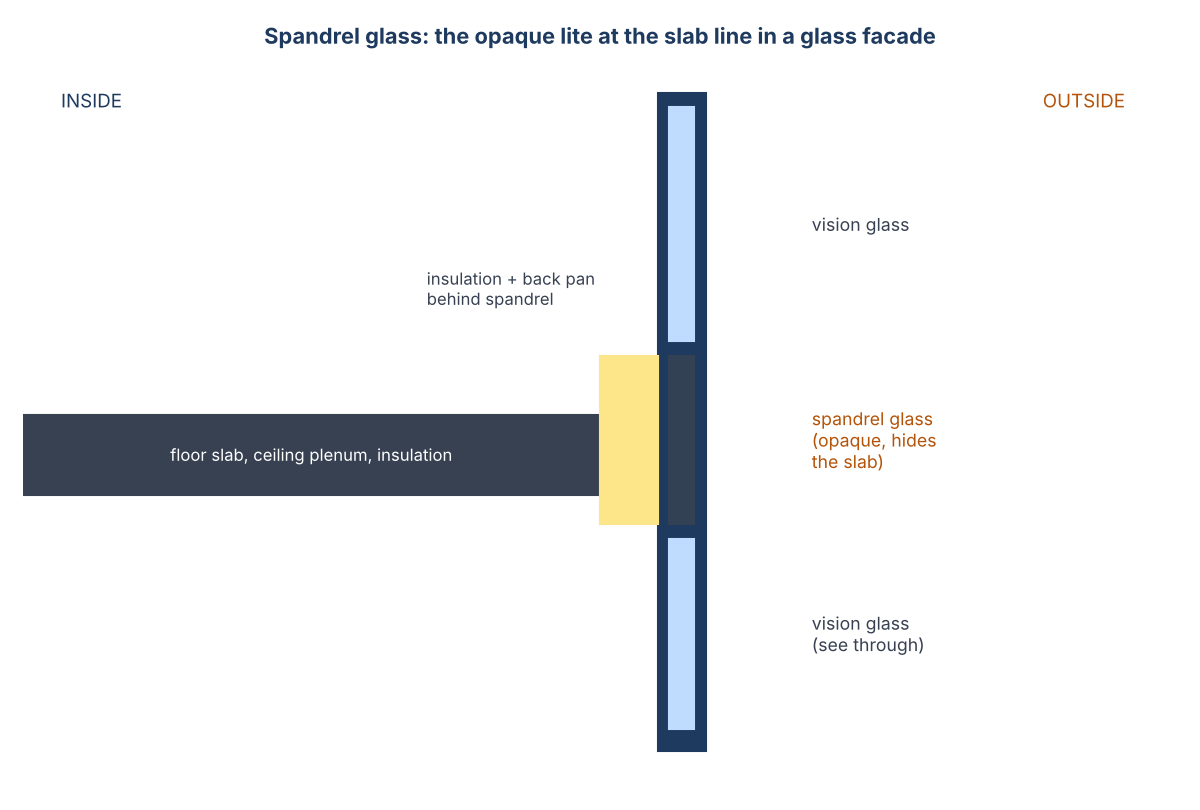
A glass facade is drawn as one plane, but a building has floors, and the band at each floor, from the ceiling of one story to the sill of the next, typically 2 to 4 feet, contains the slab, the fireproofing, the ceiling cavity and often ductwork. Spandrel glass covers that band in the same frame as the windows so that the mullion grid continues without a break. Without it the floors would read as horizontal stripes of a different material, which is the look of a window wall with slab-edge covers. With it, the whole facade is glass. It also closes the slab edge against weather and is where the fire-safing between floors is detailed.
| Type | How | Look | Notes |
|---|---|---|---|
| Ceramic frit | Ceramic enamel screened onto the back (room-side) surface and fired in during tempering | Any color; most durable; the standard for curtain wall | Full-coverage frit; the same process makes dotted or patterned frit on vision glass |
| Opacifier film or back paint | Factory-applied silicone or polyester film, or paint, on the back surface | Wide color range, lower cost | Film must be protected from moisture and UV from behind; used with a back pan |
| Shadow box | Clear or lightly coated glass with a painted metal panel set a few inches behind it | Depth and reflection; reads closer to vision glass | Must be sealed and vented to avoid condensation on the inside of the glass |
| Insulated spandrel unit | Spandrel outer lite in an insulated unit with a coated inner lite, or a spandrel lite bonded to an insulated panel | Best color match to adjacent low-E vision units | Common where the vision glass is a strongly reflective coating |
Whatever the method, the spandrel is heat-strengthened or tempered, because an opaque lite in the sun gets much hotter than a clear one and an annealed lite would crack from thermal stress. The glass is backed by mineral-wool insulation and a galvanized or aluminum back pan that seals the cavity, carries the insulation and gives the fire-safing something to butt against.
A spandrel lite next to a low-E vision unit has to look like the same glass, and it does not want to. By day the vision glass shows reflected sky plus the dark interior; the spandrel shows reflected sky plus its own opaque color. At night the vision glass glows with the lit interior and the spandrel is black. Manufacturers publish spandrel colors matched to each of their coatings, and the only reliable way to choose is a full-size sample of both, viewed outside, side by side, from the street, at noon and in the evening. We mock it up before ordering on every curtain wall; the alternative is a facade with a visible stripe at every floor.
Where the architect wants the floors to read at night as well as by day, the answer is a shadow box or a lightly fritted spandrel with a lit cavity; where the floors should vanish, a reflective vision coating with a spandrel matched to it. See tinted glass and Vitro glass for the coatings we match.
Spandrel is not only for towers. A two-story storefront or a corner curtain wall on a three-story building uses a spandrel band to hide the second-floor slab, and a ground-floor retail front uses spandrel or a back-painted panel to hide a bulkhead, a stair or a mechanical room behind the glass line. The Coney Island Avenue facade uses opaque panels in the glazing line for exactly that, and the Flatlands office building carries a spandrel band at the second and third floors of its corner curtain wall. On a replacement, matching new spandrel to existing vision glass is its own job, and samples are not optional. See also painted glass for interior back-painted panels, which are a different product.
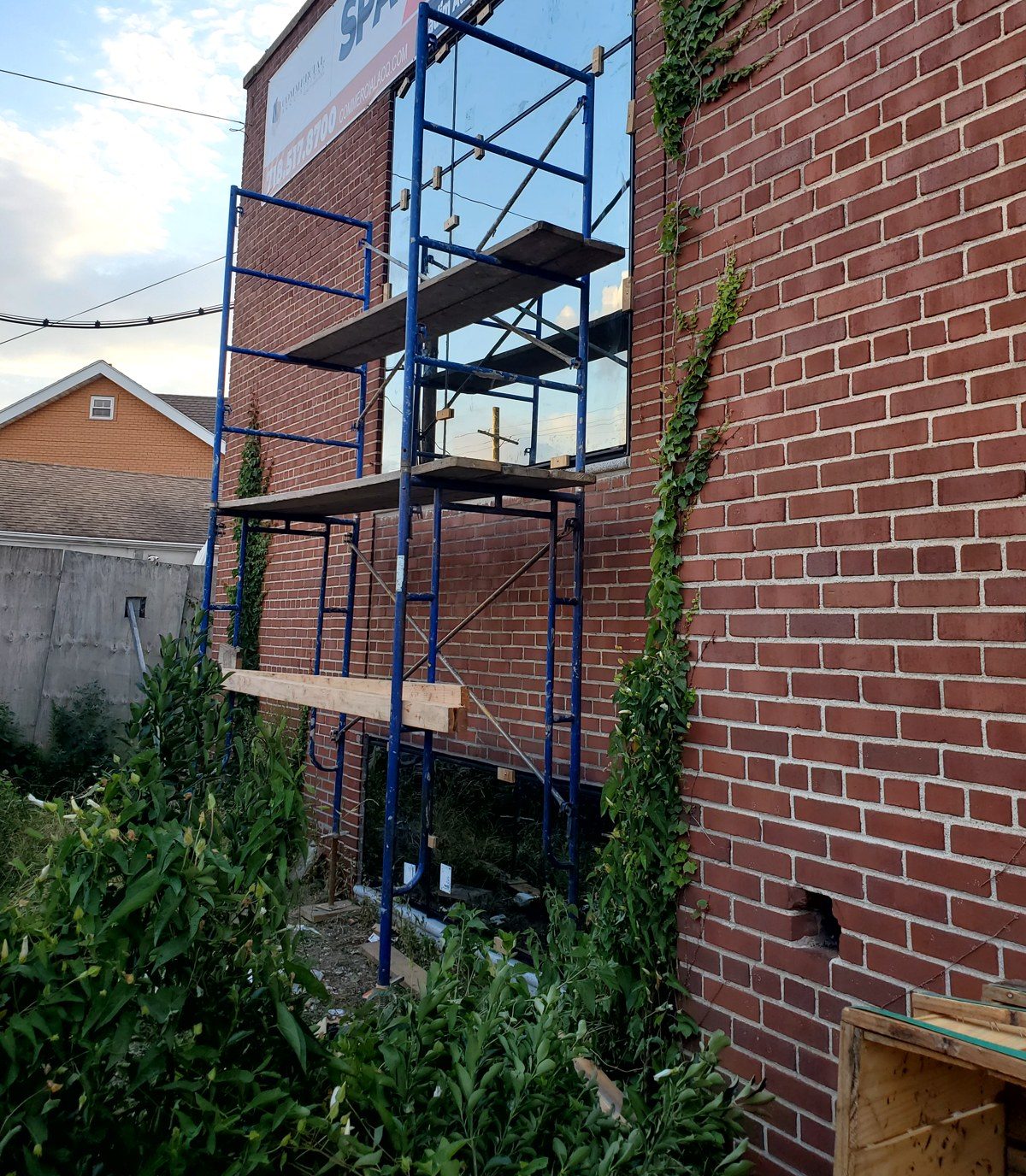
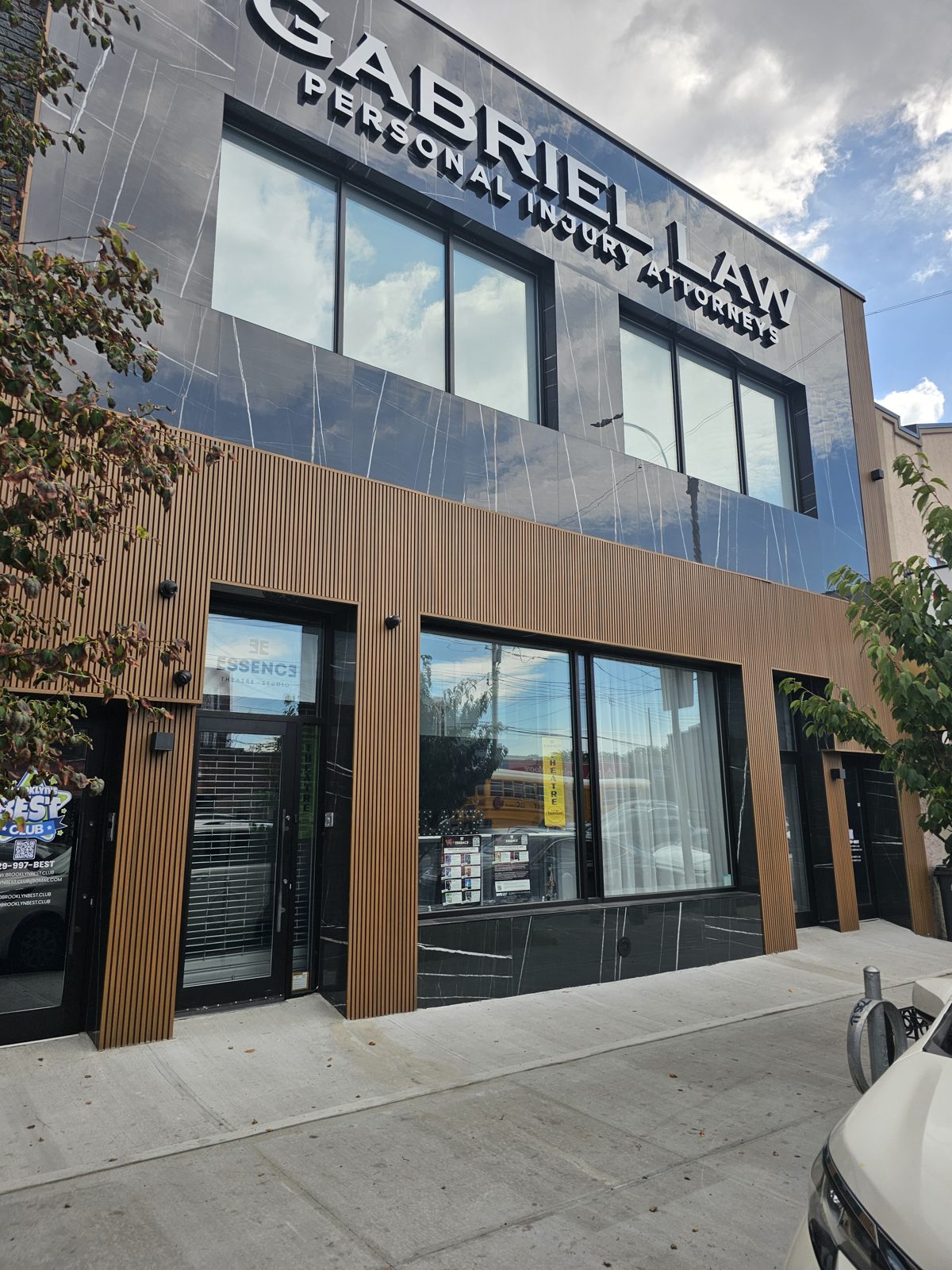
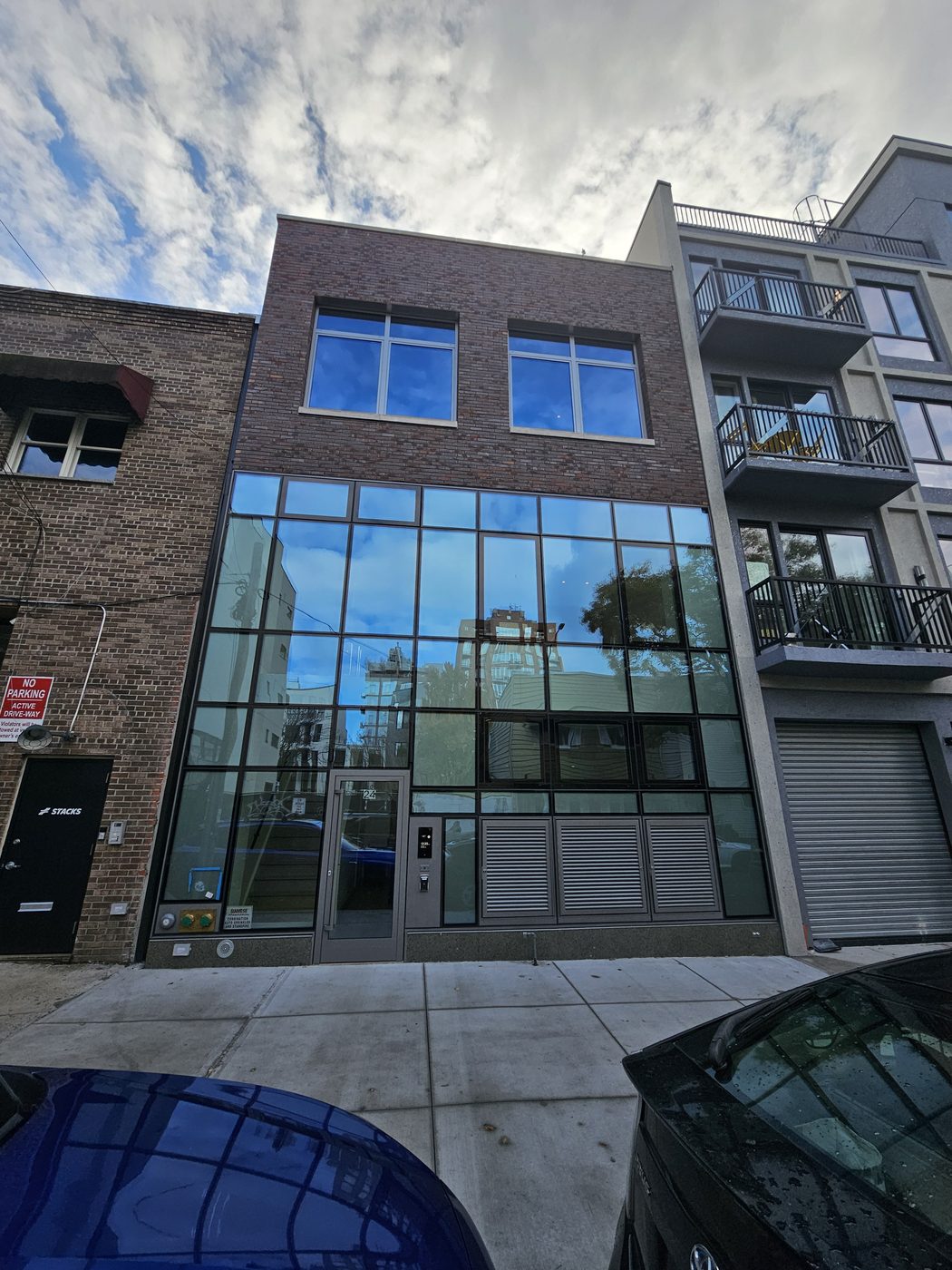
More projects are added to the portfolio as they finish.
Opaque glass in a glass facade, set in the same frame as the clear vision glass where there is a floor slab, ceiling cavity or wall behind it, so the facade reads as one plane.
Heat-strengthened or tempered, always. An opaque lite in the sun runs far hotter than clear glass and an annealed lite would crack from thermal stress.
With a ceramic frit fired onto the back surface, an opacifier film or back paint, or as a shadow box with a painted panel behind clear glass. Frit is the most durable.
Mineral-wool insulation and a metal back pan that seals and insulates the slab edge and gives the fire-safing between floors a surface to butt against.
Because the vision glass shows the dark interior and the spandrel shows its own color; at night the vision glass is lit and the spandrel is black. Color is matched to the coating with full-size samples viewed outside before ordering.
A shadow box is one way to make a spandrel: clear glass with a painted panel a few inches behind it, giving depth. A fritted spandrel is opaque in the glass itself.
At the second-floor slab of a two-story storefront or corner curtain wall, and to hide a bulkhead, stair or mechanical space behind a ground-floor glass line.
Yes, matched to the vision coating, in the curtain wall, window wall and storefront systems we install, with full-size samples before the order.
Curtain wall systems Window wall vs curtain wall Tinted glass Painted glass Heat-strengthened vs tempered Glossary: spandrel glass
About this page. Written by Alex GC Inc. d/b/a Alex Glass Construction and reviewed before publication by Aleksandr Chernovolenko, Managing Partner, with our design and estimating lead and a field foreman. Our foremen hold the NYC DOB Site Safety Training supervisor card and our crews the 40-hour worker card; we are certified to fabricate, install and service Alutech and Everest aluminum systems. Facts are drawn from our own projects, manufacturer test data and the applicable codes; where we are giving an opinion, we say so. Last reviewed November 2026. Credentials
Send the elevation and the vision glass specification. We will propose the spandrel type and color and bring full-size samples to the site.