Aluminum conducts heat about a thousand times better than glass. A thermal break is the plastic bridge that stops the cold on the outside of the frame from reaching the inside, and it is the difference between an aluminum window that condenses and one that does not.
In short: A thermal break is a strip of low-conductivity plastic, almost always glass-reinforced polyamide (nylon), rolled into an aluminum window, door or curtain wall profile so that the outside half of the frame and the inside half are not touching. Aluminum conducts heat extremely well; without the break, the frame inside the room is nearly as cold as the air outside, it condenses, it frosts, and it wastes heat. With the break, the inside half stays close to room temperature. The width of the break, from about 14 mm in basic profiles to 34 mm and more in high-performance systems, sets the frame's share of the window's U-value. Every aluminum window we install, from our own lines to Reynaers, Cortizo and Alutech, is thermally broken; a non-thermal frame has no place on an occupied building in New York. Call 929-235-1233 or request a free quote.
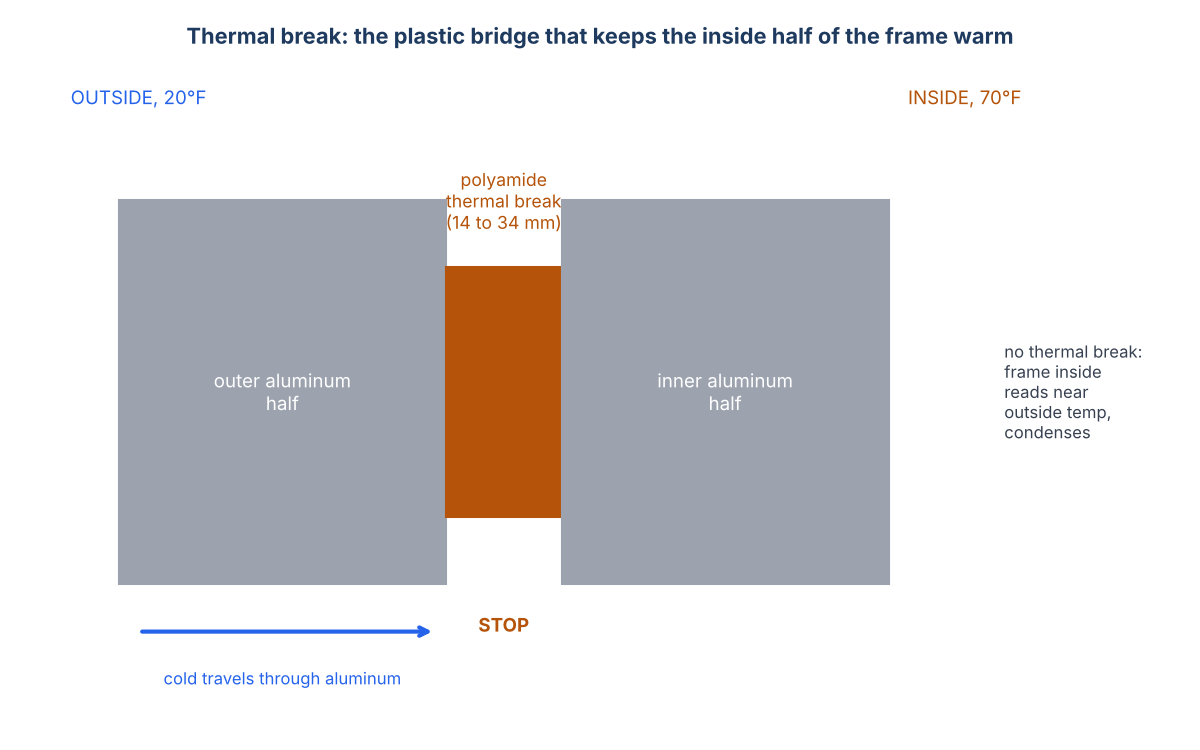
An aluminum extrusion is made as one piece, then a channel on each side is filled with the polyamide strut and the aluminum bridge between the two halves is machined away ("debridged"), leaving two separate aluminum pieces held together only by the plastic. The struts carry the structural load across the joint; the profile is as strong as a solid one. Polyamide is used because it has the same expansion rate as aluminum, so the frame does not work itself apart through summers and winters, and because it survives the powder-coating oven.
The result is that the outside skin of the frame can be at 20°F while the inside skin is at 60°F or more. Without the break, the inside skin sits near 30°F on the same day: cold to the touch, wet with condensation, and a steady drain on the heating.
| Thermal break width | Where you find it | Frame U-value (approximate, W/m²K) | What it means in a New York winter |
|---|---|---|---|
| None (non-thermal) | Old storefronts, 1960s to 1990s residential aluminum windows, budget commercial frames | 5 to 7 | Condensation and frost on the frame; cold radiates from the window |
| 14 to 20 mm | Entry-level thermally broken windows and storefront | 3 to 4 | Frame stays dry in most rooms; adequate for storefront and commercial |
| 24 to 34 mm | Reynaers, Cortizo, Alutech and comparable European residential systems; our standard | 1.6 to 2.5 | Frame near room temperature; meets residential energy code with standard low-E glass |
| 34 mm and up, multi-chamber with foam inserts | Passive-house grade systems | Below 1.6 | For certified passive house and net-zero projects |
The frame is a small share of the window area but a large share of the heat loss once the glass is low-E. On a typical residential window, a 24 mm break with a low-E argon unit brings the whole-window U-factor to the low 0.30s (Btu/hr·ft²·°F), where the New York energy code wants it; the same glass in a non-thermal frame can miss the code by a wide margin. The low-E glass page covers the glass side; the thermal break is the frame side of the same number.
A non-thermal frame cannot be retrofitted with a break; the fix is a new frame. On a storefront that is often the reason to replace rather than reglaze; see glass-only vs full replacement. On an apartment with cold aluminum windows, the replacement is a thermally broken frame of the same sightline; see window replacement.
The break is necessary, not sufficient. The window's whole-window U-factor also depends on the glass unit, the edge spacer, the gaskets and how many chambers the profile has. A good European profile adds foam inserts in the chambers and a warm-edge spacer in the glass, and uses the deep break to let the glass sit well inside the frame. That is what separates a 1.6 frame from a 3.5 frame with the same nominal break. Compare systems on the whole-window number, which the manufacturer publishes and which the NFRC label states, not on the break width alone. See aluminum vs uPVC vs wood for how a thermally broken aluminum frame compares to other materials, and the glossary entry.
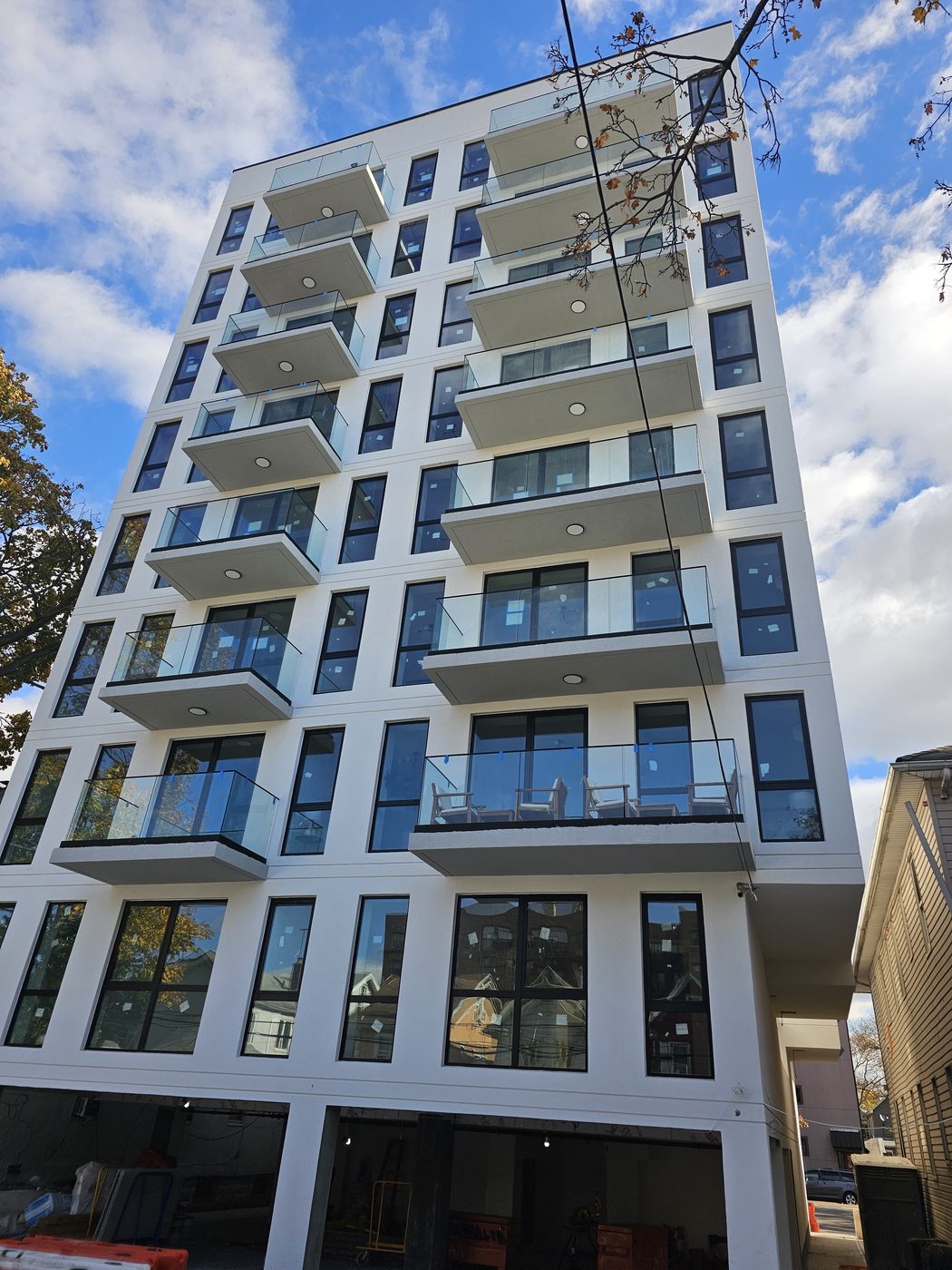
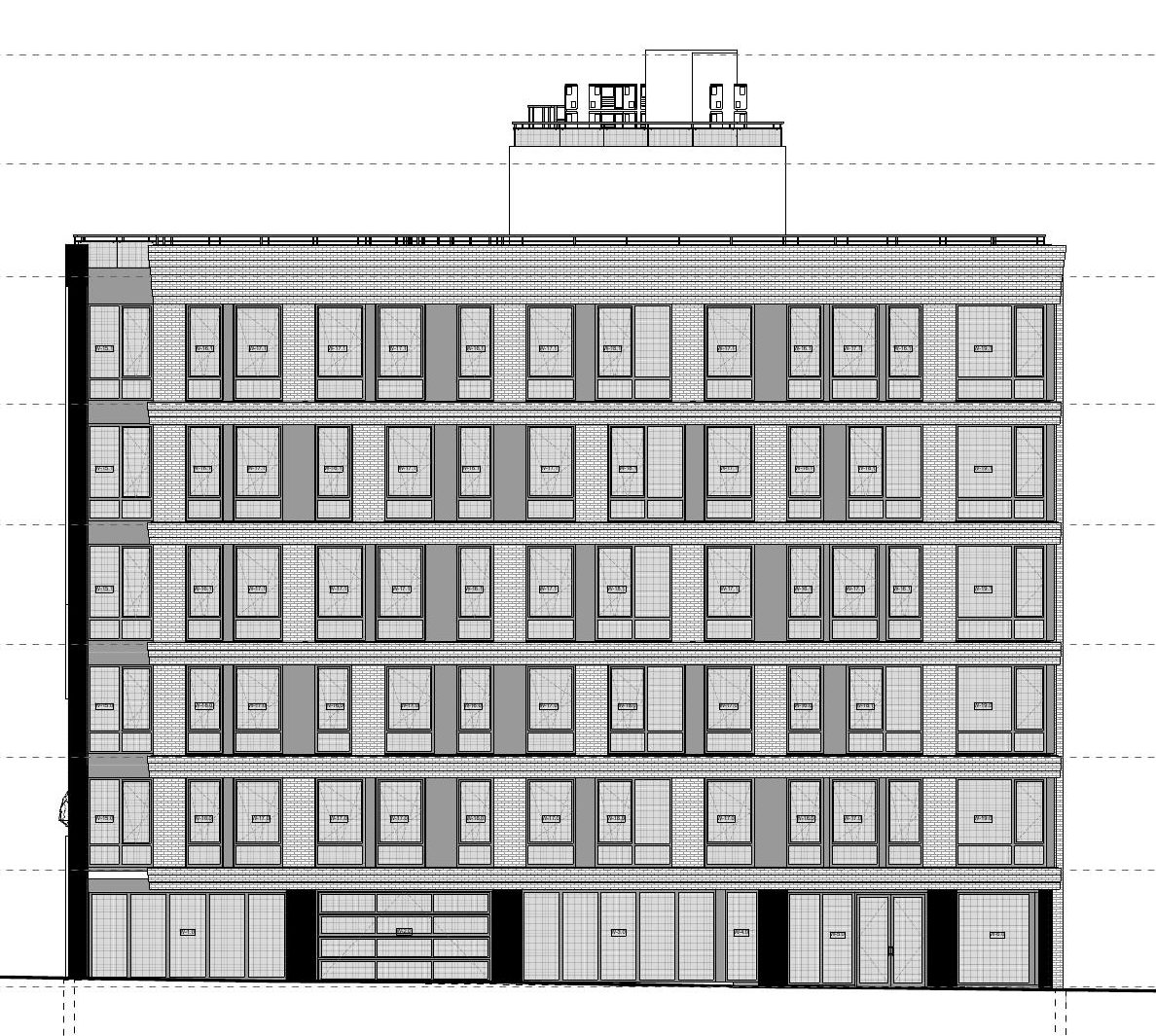
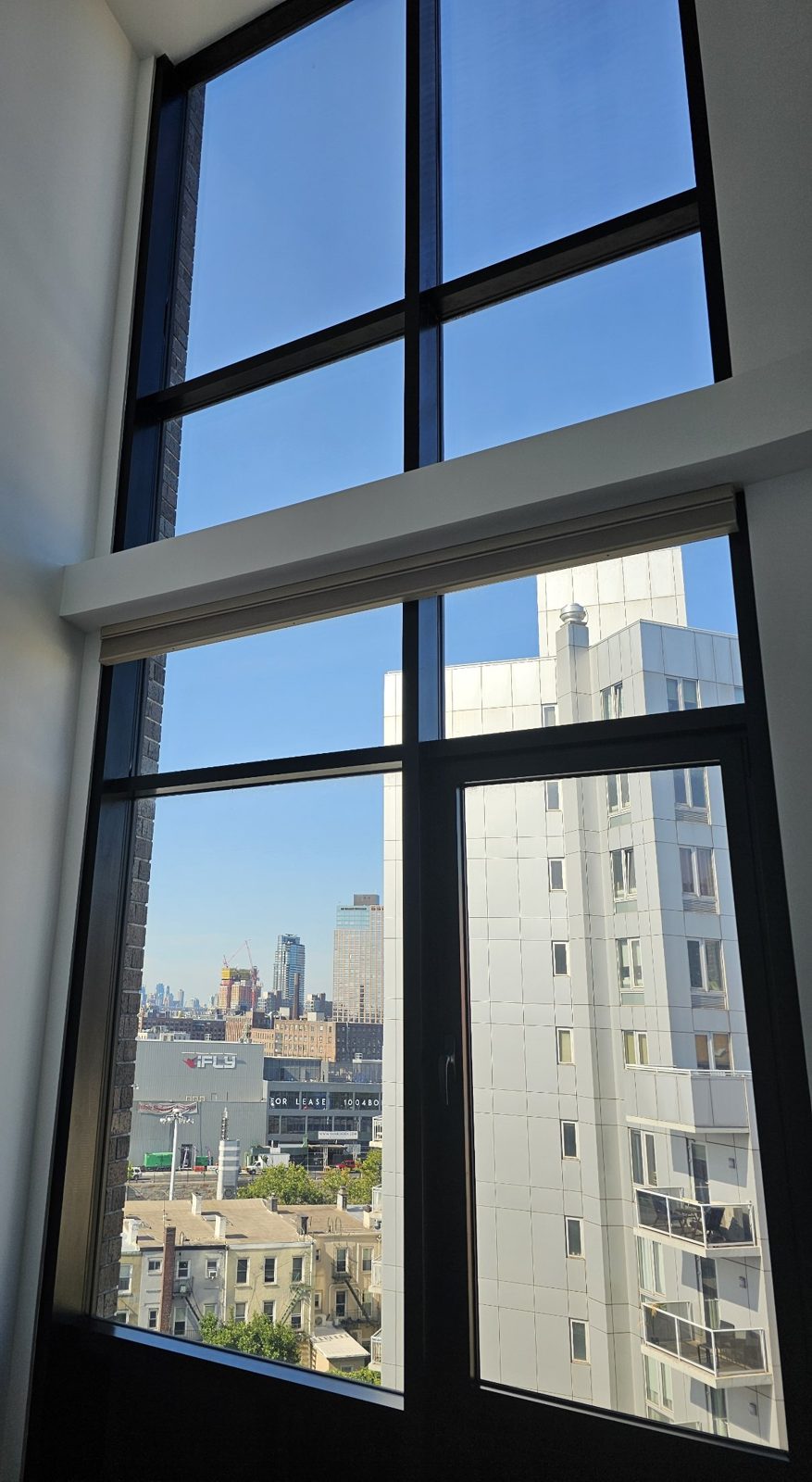
More projects are added to the portfolio as they finish.
A strip of glass-reinforced polyamide rolled into the frame profile so the outside aluminum and the inside aluminum do not touch. It stops heat conducting across the frame.
Aluminum conducts heat about a thousand times better than glass and far better than wood or vinyl. Without the break, the inside of the frame is nearly as cold as outside; wood and uPVC are poor conductors by nature.
Entry-level profiles use 14 to 20 mm; the European residential systems we install use 24 to 34 mm; passive-house systems go wider with foam-filled chambers. Wider is better, but compare the published whole-window U-factor, not the width alone.
No. The break is built into the extrusion. A non-thermal frame is replaced with a thermally broken one.
Open the sash and look at the frame edge for a plastic strip between two pieces of aluminum. Frost or condensation on the metal frame in winter means there is no break.
On the frame, in most rooms, yes. The glass edge can still condense in a very humid room if the unit has an aluminum spacer; a warm-edge spacer fixes that.
Yes. Our own aluminum lines and the Reynaers, Cortizo, Alutech and Kleidco systems we install are all thermally broken; we do not install non-thermal aluminum windows on occupied buildings.
Aluminum windows Low-E glass Spacers Aluminum vs uPVC vs wood windows Window wall vs curtain wall Glossary: thermal break
About this page. Written by Alex GC Inc. d/b/a Alex Glass Construction and reviewed before publication by Aleksandr Chernovolenko, Managing Partner, with our design and estimating lead and a field foreman. Our foremen hold the NYC DOB Site Safety Training supervisor card and our crews the 40-hour worker card; we are certified to fabricate, install and service Alutech and Everest aluminum systems. Facts are drawn from our own projects, manufacturer test data and the applicable codes; where we are giving an opinion, we say so. Last reviewed November 2026. Credentials
Send a photo of the frame edge with the sash open and the building type. We will tell you whether the frame is thermally broken and what the replacement looks like.