The slimmest frame there is, now with a thermal break and insulated glass. Where steel windows belong, what the thermal break changes, how they are matched to a pre-war original, and the brass and bronze hardware options.
In short: We supply and install custom steel windows and doors on a thermally broken profile with low-E insulated glass, for pre-war co-ops, townhouses, lofts and new houses in New York City, Long Island and New Jersey. Steel gives the slimmest frame and the finest divided-lite bars of any material; the thermal break makes it a modern window. Brass and bronze hardware — cremone bolts, handles, hinges and stays — is available as an option. We do not make bronze-framed windows; for the bronze look, the answer is steel with bronze hardware.
Steel is chosen for one reason: the sightline. A steel casement frame is roughly half the width of an aluminum one and a third of a wood one, and the muntins that divide the glass are bars you can barely see. That is the look of a 1920s Manhattan penthouse, a Brooklyn loft, a Parisian atelier, and it cannot be copied in another material at the same proportions. What used to come with it — a frame that conducted the cold, sweated in January and held a single pane of glass — is gone: the steel windows we supply are thermally broken and glazed with insulated low-E units.
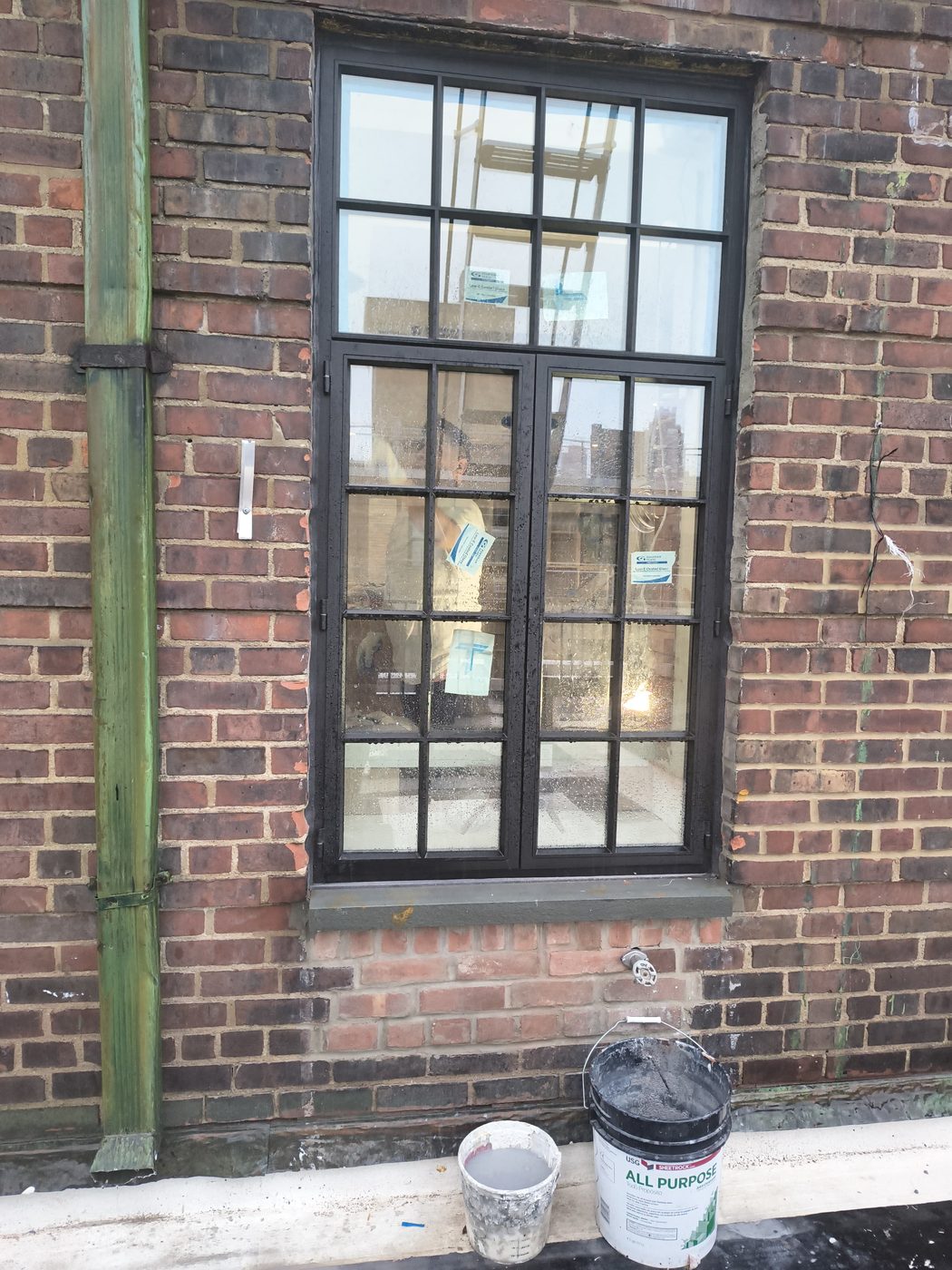
A traditional steel window is one solid section from outside to inside, so the frame is as cold on the room side as the air outside; it sweats, it frosts, and it leaks heat around the whole perimeter of the glass. A thermally broken steel profile is made in two parts, outer and inner, joined by a non-conductive polymer barrier. The outside face can be freezing while the inside face stays near room temperature. The section is also deeper, which lets it hold an insulated glass unit, so the glass performs like a modern window too. Same lines as 1928, different physics. See low-E glass and insulated glass units for the glazing side.
Most steel-window projects in New York are replacements, and the job is to match what was there. We take the reference from a surviving original on the building or from the architect’s drawings: the muntin spacing, the bar profile, the sightline of the frame, the height of the transom. The new units are drawn so the horizontal bars fall at the same heights on every window and the grid runs continuously across a window wall. At 205 East 69th Street the reference was an original arched steel window still on the upper facade; the replacements follow its four-light pattern exactly, in a thermally broken section with insulated glass.
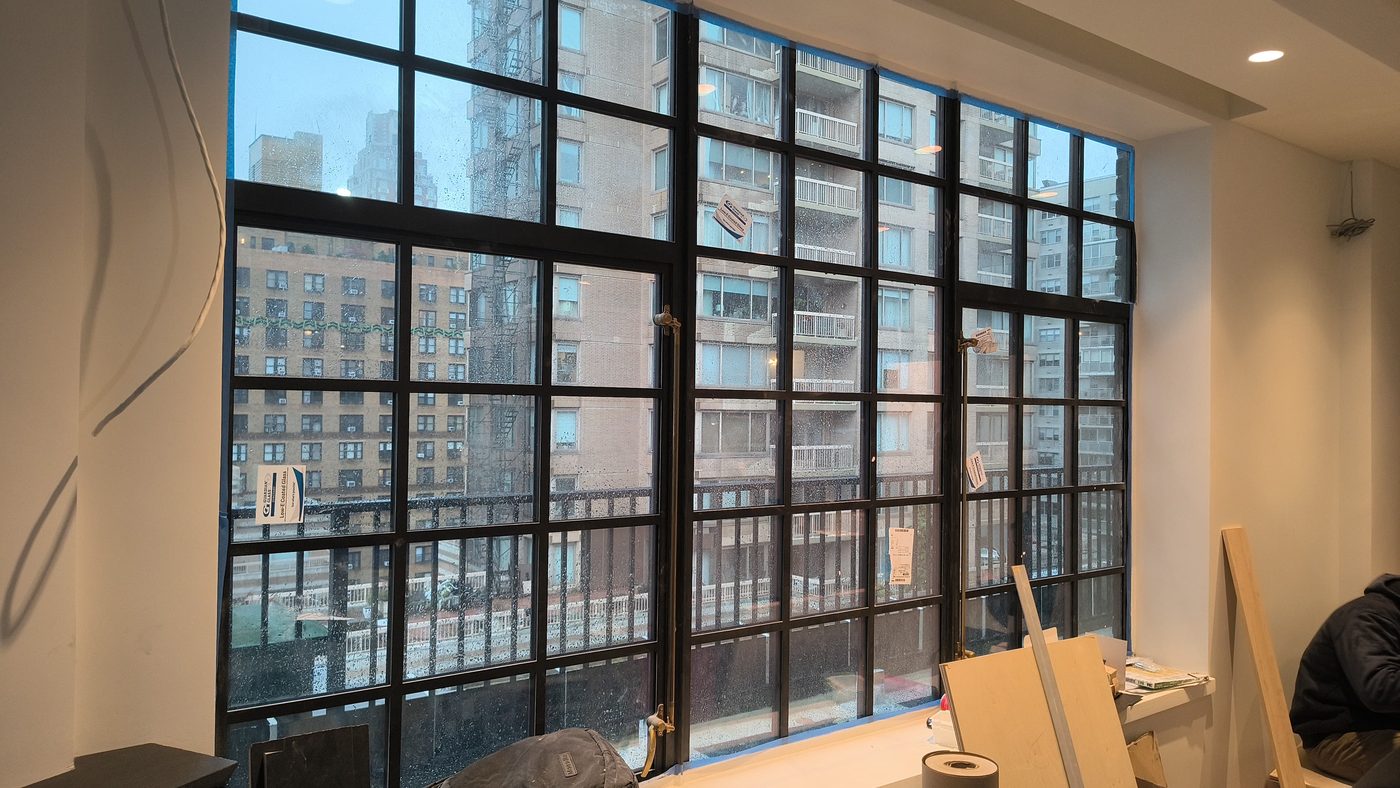
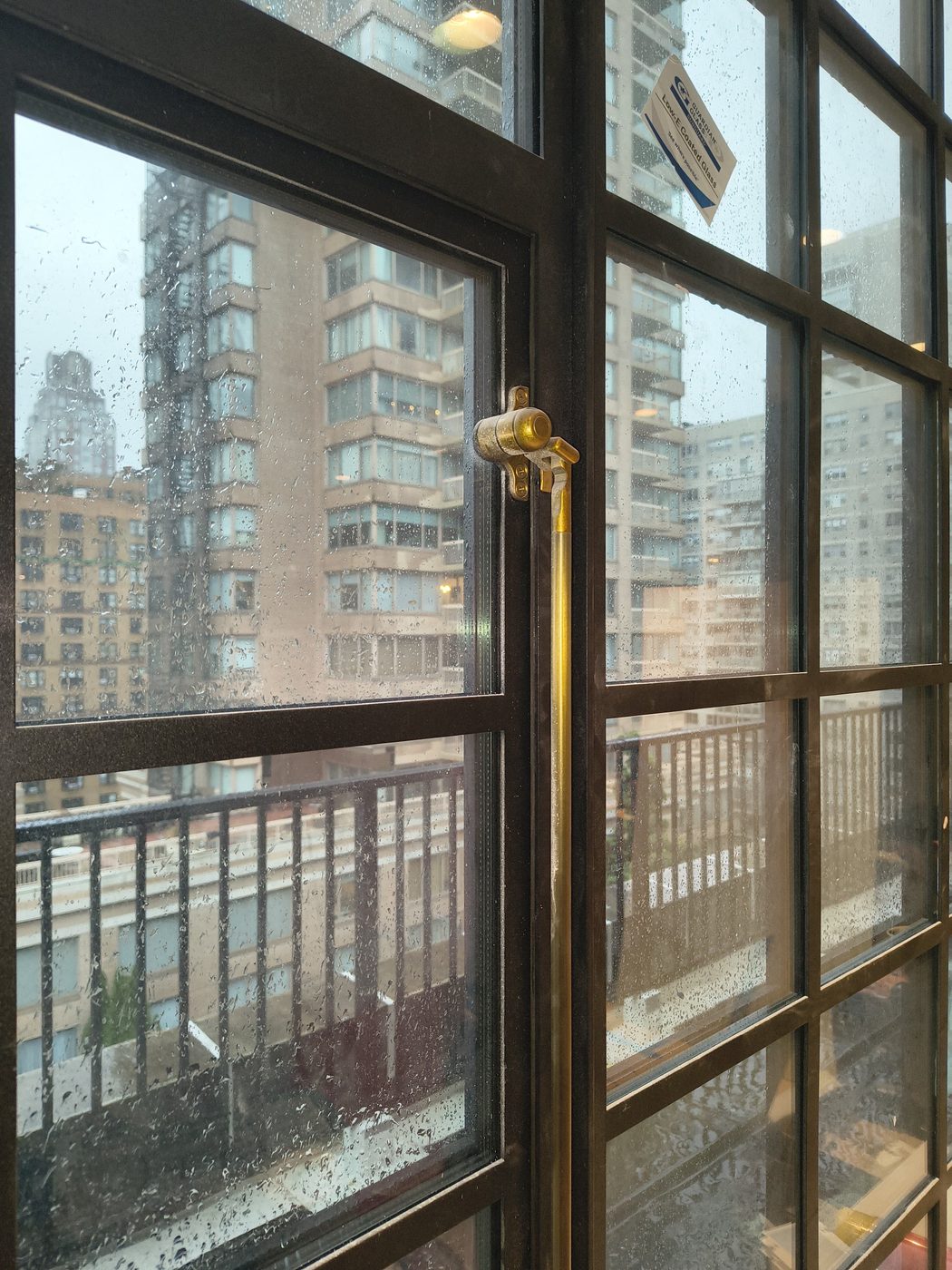
Steel windows are operated with surface hardware you see and touch every day, and that hardware is where brass and bronze come in. Options we supply:
The frames themselves are steel, powder coated or painted in black, bronze-tone or any RAL color. We do not supply bronze-framed windows; a bronze-colored steel frame with bronze hardware gives the look at a fraction of the cost. See window hardware for the full range.
| Material | Sightline | Thermal | Cost | Best for |
|---|---|---|---|---|
| Thermally broken steel | Slimmest; finest muntins | Good with thermal break and IGU | Highest | Pre-war match, lofts, architect-drawn houses |
| Thermally broken aluminum | Slim; slimmest in Reynaers and Cortizo | Very good | Medium | Most modern houses and buildings; see aluminum windows |
| Wood and clad wood | Widest | Very good | Medium to high | Brownstones, traditional houses; see wood and clad windows |
If the drawing calls for a thin black frame but not for steel specifically, a slim European aluminum system from Reynaers or Cortizo gets close at a lower cost and shorter lead time; we quote both when the choice is open.
Steel windows are made to order by specialist fabricators; we work with them rather than roll our own sections. Our part is the survey, the shop drawings that set the sightlines, muntin pattern, glass make-up and hardware, the order, the glass specification, delivery, and installation by our crews or installation management for a co-op that has its own contractor. Lead times are longer than for aluminum, typically a few months, so the order should go in from approved drawings as early as the schedule allows; see design, planning and drawings and custom fabrication.
Steel windows whose frame is made in two parts, outer and inner, joined by a non-conductive barrier, so the metal no longer carries the cold straight through to the room or sweats in winter. They keep the slim lines of a traditional steel window and take low-E insulated glass.
Yes, usually by a clear margin. Steel is a custom, hot-rolled or welded product with a longer lead time, and the price reflects it. It is chosen where the sightline or the building's character calls for it, not as a budget option.
We do not supply bronze-framed windows. What we offer is thermally broken steel windows with bronze or brass hardware: handles, cremone bolts, hinges and stays in solid bronze or brass, polished, satin or antiqued. On most projects that is the bronze people are after.
Modern steel windows are hot-dip galvanized or zinc-primed and then powder coated or painted, and properly made units last decades. The finish and the drainage of the sill are what matter; we specify both on the drawings.
Yes. Thermally broken steel profiles are made to hold insulated units with low-E coatings and, where needed, laminated glass, which is why they can replace single-glazed originals in a co-op or a landmarked building without a loss of character.
Yes. The muntin pattern, bar profile and sightline are taken from a surviving original or the building's drawings, and the new units are drawn to match so the grid runs continuously across the facade; 205 East 69th Street was done that way.
We work with specialist steel window fabricators, including Optimum Window on the 205 East 69th Street project, and supply the units with our shop drawings, glass specification and hardware, with installation by our crews or installation management for the building.
All Products Premium Windows Aluminum Windows Wood & Clad Windows Window Hardware Landmark Window Replacement Low-E Glass
About this page. Written by Alex GC Inc. d/b/a Alex Glass Construction and reviewed before publication by Aleksandr Chernovolenko, Managing Partner, with our design and estimating lead and a field foreman. Our foremen hold the NYC DOB Site Safety Training supervisor card and our crews the 40-hour worker card; we are certified to fabricate, install and service Alutech and Everest aluminum systems. Facts are drawn from our own projects, manufacturer test data and the applicable codes; where we are giving an opinion, we say so. Last reviewed September 2026. Credentials
Send photos of the existing windows or the architect's elevations, the sizes, and whether the building is a co-op or landmarked. We will propose the profile, the muntin pattern, the glass and the hardware, and quote it supplied or installed.