Nine steps from the first decision to handover: who must approve it, what a survey covers, what to choose, how to compare quotes, and what happens on installation day.
A storefront is the one part of a building that every customer touches. It is also an unusual purchase: it is made to order for one opening, it cannot be returned, it involves the landlord and sometimes the city, and the business usually has to stay open while it is replaced. Most owners buy one once. This guide sets out the process in the order it actually happens, from deciding what you need to the day the new door is handed over, based on the storefronts we measure, fabricate and install in New York City and New Jersey.
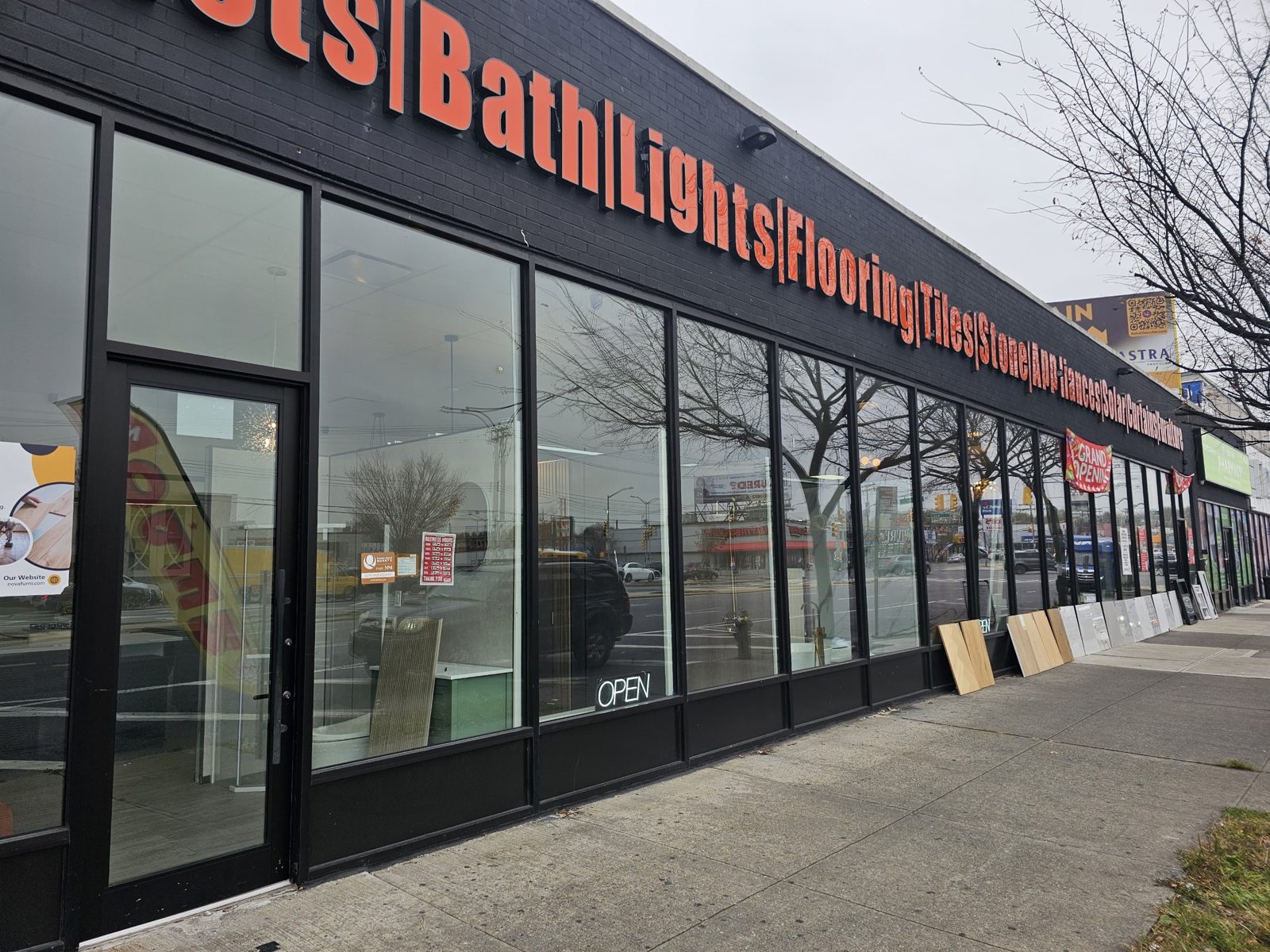
Each step is explained below, with the questions to ask and the mistakes we see most often.
Not every tired storefront needs replacing. A door that drags, a closer that slams, one cracked or fogged glass unit, or failed sealant can usually be fixed for a fraction of the price of a new front. See storefront repair.
Replacement makes sense when:
If you are unsure, ask for both prices. A company that only offers replacement is not giving you the full picture. For what a new front changes, see storefront replacement: benefits and outcomes.
Sort this out before you spend money on drawings.
None of this is difficult, but each item can stop a job that has already been paid for. Ask your supplier early which ones they expect to apply.
A storefront is priced from a survey, not from a photograph. A proper one records:
The survey is where problems are cheap to find. A rusted lintel or a rotted curb discovered on installation day means a storefront that cannot go in and a shop that is open to the street. See masonry opening and daylight opening in our glossary for the terms used on drawings.
Most shopfronts use an aluminum storefront system: rectangular framing members, typically about 2 inches wide and 4½ inches deep, with glass set into them. It is designed for ground-floor openings up to roughly one story. Taller fronts, or fronts that span more than one floor, need a curtain wall, which is a stronger and more expensive system. For an exterior front, ask for thermally broken framing; it has an insulating barrier inside the metal and is what stops condensation and cold. See commercial aluminum systems.
Finish is the other choice: clear or bronze anodized, or painted in any color. Black is the most requested at present. Custom colors add time.
The door takes all the wear, so it deserves more thought than it usually gets: single or pair, stile width, pull handles, closer, lock and threshold. We have covered those choices in commercial storefront doors: stile, pulls and closer. Decide also whether you need a transom above, sidelights, a mail slot, an intercom or card reader, or an automatic operator, because each needs preparation in the frame.
Send every bidder the same information: photographs of the front from across the street and close up, rough width and height, what you want changed, and any landlord or landmark conditions. Then check that each quote states:
Exclusions matter most. Steel repair above the opening, masonry or curb repair, electrical work for signs and door operators, permits and sidewalk protection are commonly left out. A low price with these excluded is not a low price. Buying from the company that both makes and installs the storefront keeps one party responsible for the whole opening; we explain why in how windows and storefronts are sold.
After you accept a quote, the supplier measures precisely and produces shop drawings: an elevation of the front with every dimension, sections through the head, sill and jambs, the door and hardware schedule, the glass types and the finish. You, and the landlord or architect if they are involved, review and sign them.
What you sign is what gets made. Check the door position and the direction it swings, the height of horizontal bars against your display and signage, the clear width of the entrance, the color, and where locks, pulls and any intercom go. Changes at this stage are easy. Changes after fabrication are a new order.
Fabrication starts when the drawings are approved and the deposit is paid, not when you first call. The metal is cut and assembled, the glass is ordered to exact size and tempered, and the door is prepared for its hardware. A standard finish with standard glass typically takes several weeks. Custom colors, laminated or oversized glass, special hardware and landmark approvals each add to that.
Because everything is made to your opening, a storefront order cannot be cancelled or returned once fabrication has begun. That is normal in this trade, and it is the reason steps 3 and 6 deserve your attention.
For an ordinary shopfront, removal of the old front and installation of the new one usually take one to three days. Plan with your installer:
A correct installation sets the sill in a waterproofed pan, anchors the frame to the structure, fills the perimeter joint with backer rod and silicone sealant, and adjusts the door and closer under real use. The weep holes at the bottom of the frame must be left open so that water can drain.
Before the installer leaves, open and close the door several times, lock and unlock it, check that it latches without slamming, look along the sealant joints and confirm that the glass is clean and unscratched. Ask for the keys, the hardware information, the glass specification and the warranty in writing.
A storefront needs little maintenance: wash the frames and glass, keep the weep holes and the threshold clear, and have the closer checked and adjusted when the seasons change, because temperature affects its speed. Deal with a sticking door early; it is almost always an adjustment, and leaving it damages the hardware.
This is why a price per foot from a phone call is not reliable. A survey and a written scope are.
This guide was written by Alex GC, a glass and glazing company based at 7 Beach Street, Staten Island. We survey, fabricate and install aluminum storefronts and entrances across New York City and New Jersey; recent examples include 3915 Flatlands Avenue, a storefront and facade on Flatbush Avenue, Coney Island Avenue and 1209 Vine Street in Philadelphia. It describes how the process works on our projects. Permit, landmark and accessibility requirements depend on the building and the scope of work, so confirm them with your architect or the relevant agency for your address.
Allow for the survey, shop drawings and approvals, then several weeks of fabrication for a standard finish and glass, then one to three days on site for an ordinary shopfront. Custom colors, special glass and landmark approvals add time.
It depends on the scope. Like-for-like replacement in the same opening is treated differently from changing the opening, the structure or the entrance, and landmarked buildings need separate approval. Your architect or expediter can confirm for your address.
Usually. Most shopfronts are replaced in one to three days, often on the quietest day, and larger fronts can be done in sections with the opening secured each night.
The framing system and finish, the glass make-up, the door and hardware, removal of the old front, flashing and sealant, trim, drawings, lead time, installation time, payment terms, warranty and a clear list of exclusions.
Not once fabrication has started. Every storefront is made to its opening and cannot be resold, which is why the survey and the shop drawings need careful checking.
Storefront framing is made for ground-floor openings about one story high and is anchored at the sill and head. Curtain wall is a stronger system that can span several floors and costs more.
Repair if the frames are sound and the problem is a door, a closer, one glass unit or sealant. Replace if the frames are corroded, single-glazed, leaking in several places, or the layout is changing.
Storefront Doors Storefront Repair Curtain Wall Systems Commercial Door Design Storefront Replacement: Benefits Energy Grades and Storefronts All News
About this page. Written by Alex GC Inc. d/b/a Alex Glass Construction and reviewed before publication by Aleksandr Chernovolenko, Managing Partner, with our design and estimating lead and a field foreman. Our foremen hold the NYC DOB Site Safety Training supervisor card and our crews the 40-hour worker card; we are certified to fabricate, install and service Alutech and Everest aluminum systems. Facts are drawn from our own projects, manufacturer test data and the applicable codes; where we are giving an opinion, we say so. Last reviewed September 2026. Credentials
Send photographs of the front, the rough width and height, and what you want to change. We will tell you whether it needs repair or replacement and arrange a survey.