Exterior and interior glass on a new building, phase by phase, and how to choose the contractor who does it.
Windows are only part of the glass on a new building. There is the storefront, the lobby entrance, the curtain wall at the corner, the balcony railings, the shower enclosures, the mirrors, the partitions in the amenity spaces. A glazing contractor for new construction takes all of it. This article explains what a glazing contractor does through each phase of a project and how to choose one.
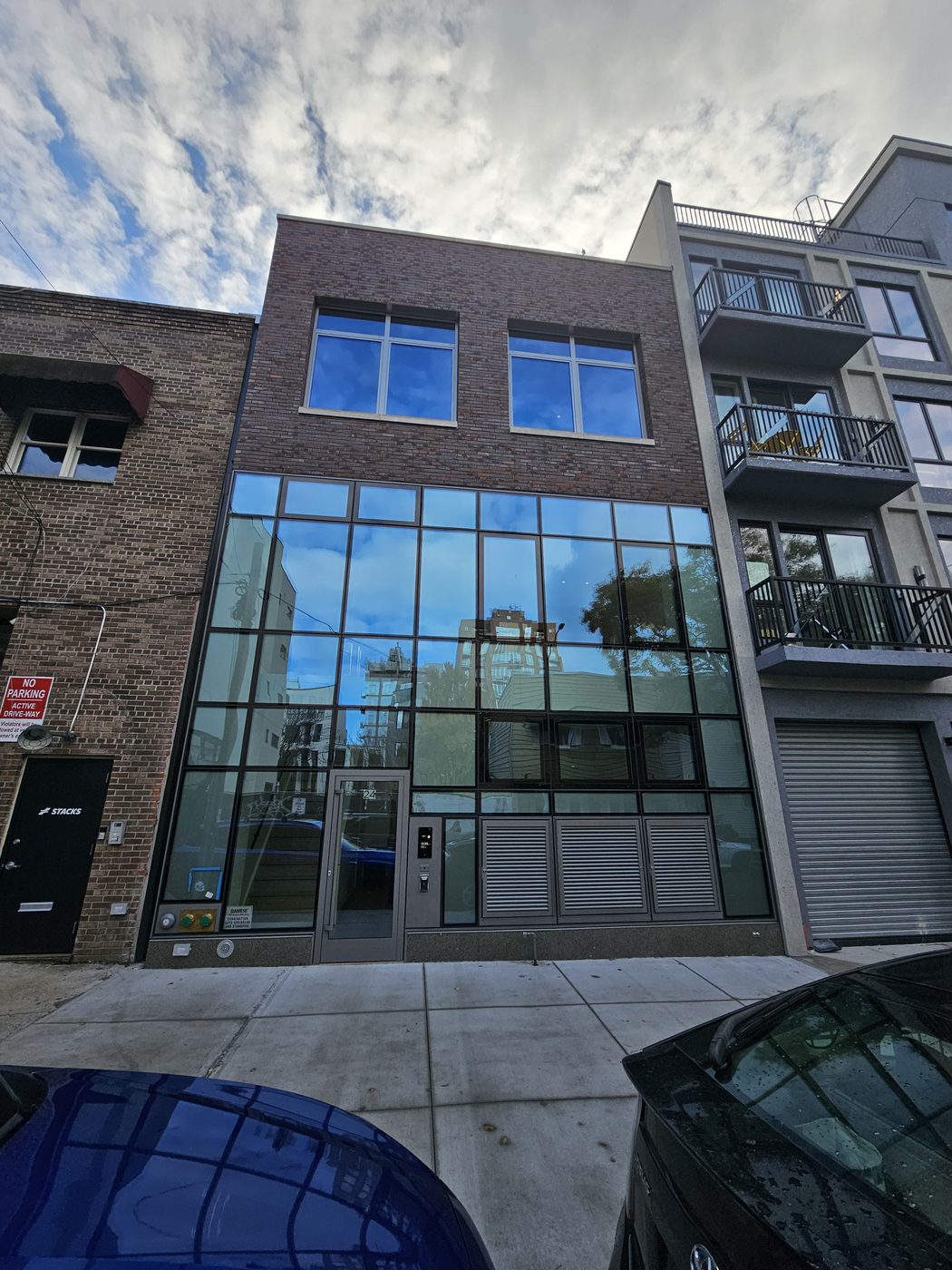
The three overlap but are not the same. A window company sells and installs windows. A glass shop cuts and installs glass: mirrors, table tops, shower doors, replacement panes. A glazing contractor does both and adds the engineered systems that hold glass on a building: storefront, curtain wall, window wall, entrances and structural glass. On a new building that breadth matters, because the scopes touch one another at every corner.
Interior glass is often left until late and bought piecemeal. Including it with the exterior package gets it measured and ordered in time for turnover.
The most useful work a glazing contractor does happens before anything is ordered:
Curtain wall, large storefront and glass railings are engineered systems. The glazing contractor provides shop drawings showing every elevation, section and anchor, with structural calculations for framing, anchors and glass where the project requires them, prepared and sealed by a professional engineer. Windows need shop drawings too, with anchoring and perimeter details. The design team reviews and approves before fabrication.
Some systems arrive from the manufacturer as finished units. Others are fabricated by the glazing contractor from stock lengths: profiles cut, machined, assembled and glazed in the shop. Shop fabrication gives control over quality and schedule and allows custom shapes, such as arched heads and curved storefront. Ask where your windows and storefront will be made and whether you can see the shop.
On site the glazing contractor works in step with the structure and facade: embeds and anchors first, then frames, flashing and sealant, then glass, then doors and hardware, with interior glass following the finishes. Large glass needs cranes or manipulators and street permits arranged in advance. The first installed units are the mock-up and should be water tested.
A new building’s glazing comes from several sources at once: aluminum profiles from the system manufacturer, glass from a fabricator, hardware from specialist makers, sealants and gaskets from others. The glazing contractor orders and tracks all of them so they converge on the shop and the site in the right order. Long-lead items, typically custom finishes, oversized or specialty glass and imported systems, are identified at the start and released first. Ask your contractor for a procurement schedule, not only an installation schedule.
At handover the glazing contractor provides warranties for each system, maintenance instructions, as-built drawings and spare parts. Doors and operable windows are adjusted after the building has been in use for a while, because closers and hinges settle. Glass is inspected and replaced where damaged by other trades. A contractor who also does service work stays useful to the owner for years: replacing a broken unit, re-gasketing a door, adding a partition for a new tenant. See storefront repair.
The same contractor may be asked for very different things. A condominium wants slim frames, quiet apartments and frameless showers. An office building wants curtain wall, entrances that survive heavy use and interior glass fronts. A mixed-use building wants both, with a storefront that suits tenants not yet signed. A glazing contractor who works across all three understands how the scopes meet, for example where residential windows above line up with storefront mullions below.
Supplies and installs everything made of glass and its framing: windows, curtain wall, storefront, entrances, glass railings, shower enclosures, mirrors and interior partitions.
A window installer fits windows. A glazing contractor also designs, fabricates and installs engineered systems such as curtain wall, storefront and glass railings, and handles interior glass.
During design, for budgeting, system selection and constructability review, well before the package is awarded.
Yes. Shop drawings come with structural calculations for framing, anchors and glass where the project requires them, sealed by a professional engineer.
Yes, and it keeps finishes consistent and gets interior glass ordered in time for turnover.
Wholesale Windows for Contractors NYC Window Supplier: Brooklyn, Queens, Staten Island, NJ Aluminum Windows for Multifamily New Construction Window Package for a New Development Bulk Window Orders for Builders Window Subcontractor NYC New Construction Windows NYC Choosing a Window Supplier Material Supply Aluminum Windows Portfolio All News
About this page. Written by Alex GC Inc. d/b/a Alex Glass Construction and reviewed before publication by Aleksandr Chernovolenko, Managing Partner, with our design and estimating lead and a field foreman. Our foremen hold the NYC DOB Site Safety Training supervisor card and our crews the 40-hour worker card; we are certified to fabricate, install and service Alutech and Everest aluminum systems. Facts are drawn from our own projects, manufacturer test data and the applicable codes; where we are giving an opinion, we say so. Last reviewed September 2026. Credentials
Send the window schedule, elevations or a simple list of sizes and quantities. We will price it, with or without installation, and confirm the lead time.